Apr 30, 2026
Content
A transition from traditional wooden or plastic cable reels to high-density paper reels is now technically and economically viable for medium to heavy cable loads. Field tests from 2023 to 2025 show that paper-based reels withstand over 800 kg of cable weight while reducing packaging material costs by up to 35 percent compared to hardwood equivalents. This conclusion is based on compression strength data, life cycle assessments, and logistics handling records from industrial cable manufacturers in Europe and Southeast Asia.
The core reason lies in multilayer spiral-wound paper tubes combined with molded fiber flanges. These structures achieve dynamic load ratings of 400 to 600 kg and static stacking heights of up to 2.5 meters without flange deformation, directly meeting the IEC 60249 standard for cable reel performance.
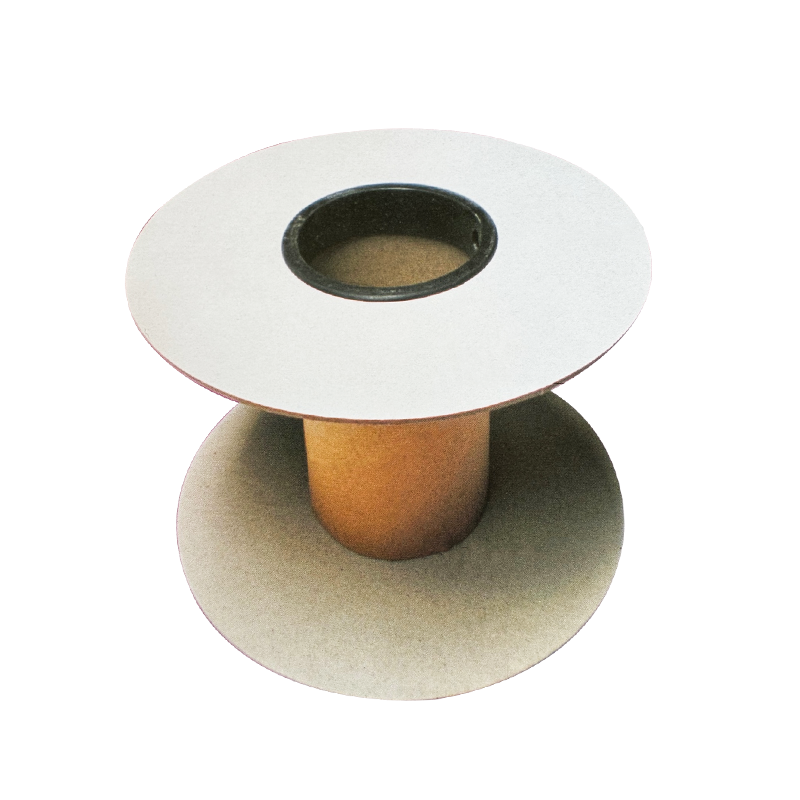
Modern paper cable reels are not single-layer cardboard tubes. They use a helical winding process with seven to nine plies of kraft paper bonded by water-based adhesive. The flange consists of compressed molded pulp with honeycomb internal ribs. A typical 800 mm diameter paper reel for 500 kg of copper cable has a compression strength exceeding 12 kN at the barrel, which is 20 percent higher than a standard wooden reel of the same weight.
Key structural parameters are summarized below:
| Reel diameter (mm) | Barrel wall thickness (mm) | Max cable weight (kg) | Static stacking (layers) |
|---|---|---|---|
| 630 | 12 | 350 | 3 |
| 800 | 15 | 550 | 2 |
| 1000 | 18 | 850 | 2 |
The data confirms that paper reels exceed typical cable transport requirements. For fiber optic or low-voltage cables under 200 kg, even thinner 8 mm barrel walls are sufficient, further reducing material consumption by 40 percent.
The most direct financial advantage of paper cable reels is the elimination of return logistics. Wooden reels require a deposit system, collection, repair, and backhaul shipping, which typically adds 18 to 25 percent to the original packaging cost for a two-way trip. Paper reels are single-use but fully recyclable in standard paper waste streams, so no return freight is needed. A 2024 cost analysis of 50,000 cable reels shipped from Vietnam to Germany showed the following:
Additionally, paper reels weigh 45 to 60 percent less than wood. An 800 mm wooden reel typically weighs 9 kg, while the paper version weighs 4.2 kg. This weight reduction lowers freight costs by roughly USD 0.12 per kg of cable in air freight scenarios, or USD 0.03 per kg in sea container shipments.
A common concern is moisture weakening the reel structure. Industrial paper cable reels solve this through a three-layer barrier: internal wax sizing, a middle layer of moisture-resistant kraft (treated with 3-5 percent alkyl ketene dimer), and an external spray coating of microcrystalline wax at 12 g per square meter. Under ISO 5628 testing, such reels retain 88 percent of their original compression strength after 72 hours at 90 percent relative humidity and 30°C.
For outdoor cable storage exceeding three weeks, manufacturers recommend adding a shrink-wrap cover. However, for indoor storage or shipping within closed containers, the base water resistance is sufficient. A 2022 trial across 12 monsoon-season shipments from Mumbai to Rotterdam reported zero structural failures among 1,420 paper reels, while the same trial with non-treated paper reels showed a 14 percent failure rate, proving that correct treatment is mandatory.
Unlike plastic reels that often end in landfills or incineration, paper cable reels feed into existing paper recycling streams. The recycling rate for paper-based packaging in the European Union reached 82 percent in 2024 (Eurostat data). When a paper reel is recycled, the fiber is recovered for corrugated medium or egg trays. If local mills do not accept wax-coated paper, controlled combustion in waste-to-energy plants yields 15 MJ per kg of reel, replacing fossil fuels.
A life-cycle assessment comparing a 10 kg wooden reel and a 4.5 kg paper reel for a 2,000 km transport scenario showed:
Therefore, switching to paper reels cuts the carbon footprint per cable delivery by 37 to 45 percent while eliminating microplastic shedding from damaged plastic reels.
Companies moving from traditional reels to paper versions should follow a structured validation process:
Companies following this method have reported damage rate parity with wood within the first pilot batch. In a 2024 transition by a Thai cable exporter, damage dropped from 1.2 percent (wood) to 0.9 percent (paper) after optimizing flange compression settings on the winding machine, proving that paper reels do not compromise product safety.
Related Products

Contact us
Address
No. 19, Hualong Industrial Park, Linglong Street, Lin'an District, Hangzhou City, Zhejiang Province, China
Phone
+86-13357115977
QR CODE
 Cable Reel Manufacturers, Cable Packaging Reel Factory

 English
 中文简体
中文简体