Nov 06, 2026
Content
A 120-tonne gantry crane travelling 180 m of runway will wear through its festoon cable long before the steel structure shows any sign of fatigue, and the replacement order usually arrives at a buyer's desk described simply as a crane cable reel. That phrase covers two products that share almost nothing: the powered device that feeds cable to a moving crane, and the drum the cable is delivered on.
Confusing the two is expensive. A drum sized on the wrong cable diameter can crush a jacket inside a container, and a take-up reel rated below the cable weight can drag a festoon trolley off its track. This guide separates the two, then focuses on the specification decisions that actually cause failures in the field.
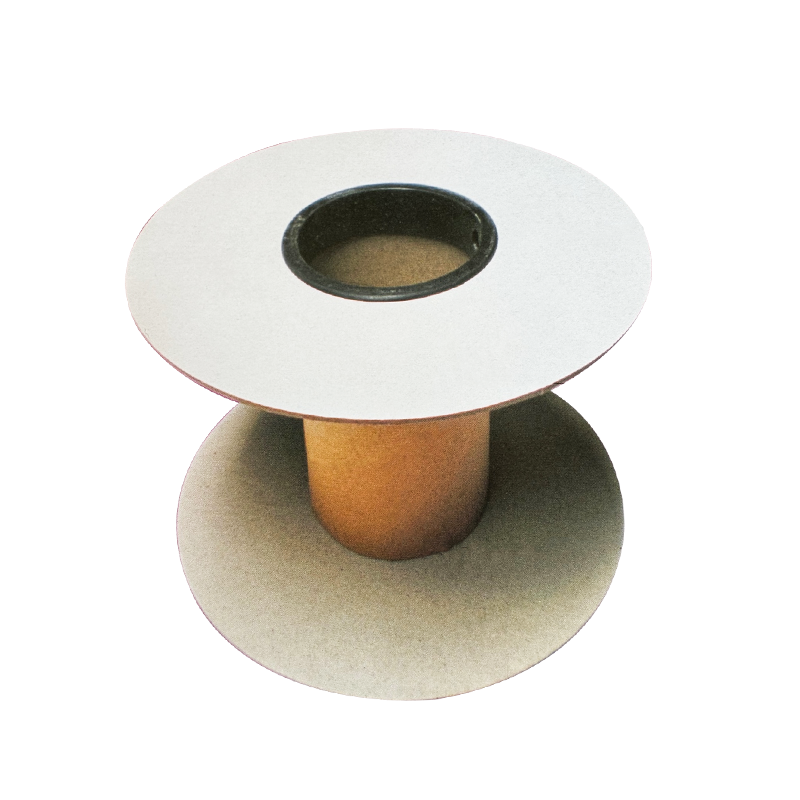
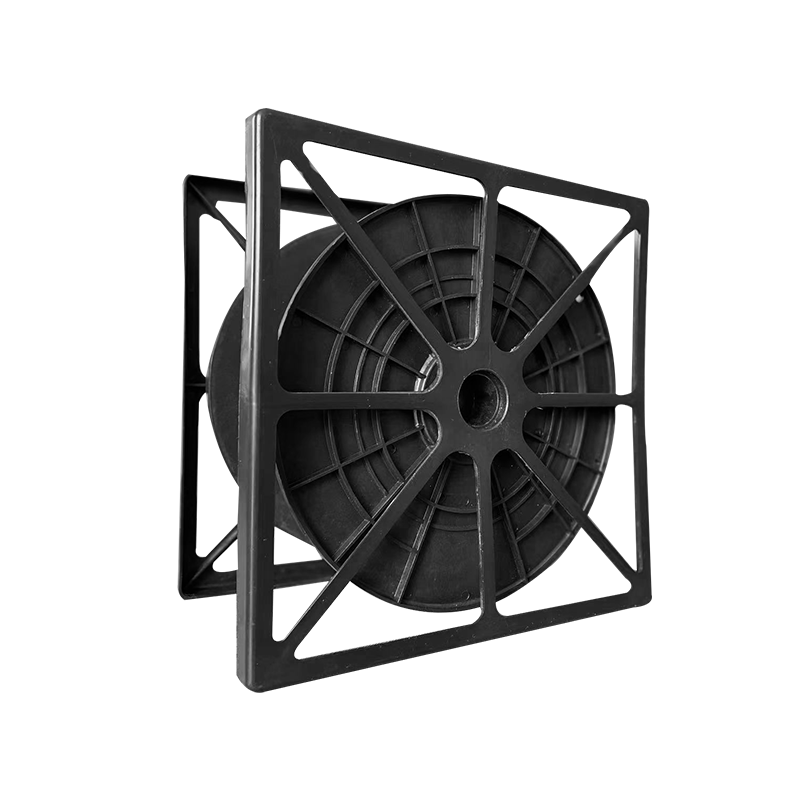
A crane cable reel is either an active take-up device mounted on the crane structure, or a passive drum on which crane cable is wound for storage, transport and pay-out.
Working definition: a crane cable reel is the interface between a cable and whatever moves it, whether that is a crane trolley pulling cable through a festoon run or a truck carrying 500 m of cable to a site.
The two are bought from different suppliers and specified with different numbers. If you need the device, ask for a rewind reel and quote the travel distance, cable diameter and duty cycle. If you need the package, ask for a cable drum and quote the wound weight.
Reel sizing is driven by the cable's outside diameter and minimum bend radius first, and only then by the weight that a crane, forklift or truck has to lift.
Three numbers decide whether a drum works at all:
Under-declaring that weight is the single most common specification error in this category. The drum gets built for the length, the crane on site is booked for the length, and the first lift exposes the gap between the two.
Plywood and heat-treated solid wood dominate crane cable work because they carry heavy loads and survive outdoor yards; paper and plastic cover lighter cable, short trips and moisture-sensitive insulation.
| Plywood (poplar, okoume) | Up to roughly 3 t wound weight | Export cable, repeated handling, printed reel markings | Exempt, processed wood |
| Heat-treated solid wood (spruce, cryptomeria) | Above 2.5 t, high stiffness demand | Heavy power cable, long-haul export | ISPM 15 treatment and IPPC mark |
| Paper | Light to medium loads | Single-trip delivery, recycling-driven projects | Exempt, processed material |
| Plastic (HDPE) | Medium loads | Damp yards, repeated reuse, moisture-sensitive cable | Exempt, no wood packaging |
Plywood has become the default for export cable because it is dimensionally stable, free of knots and bark, and can be printed with length and route markings without splitting. Where the wound weight climbs above roughly 2.5 t, solid wood still wins on stiffness.
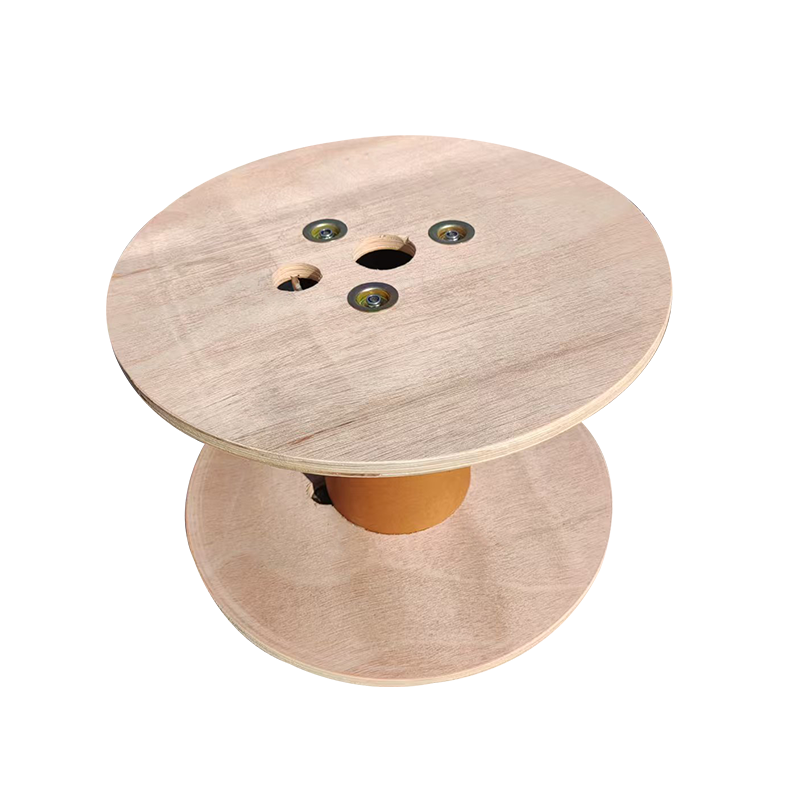
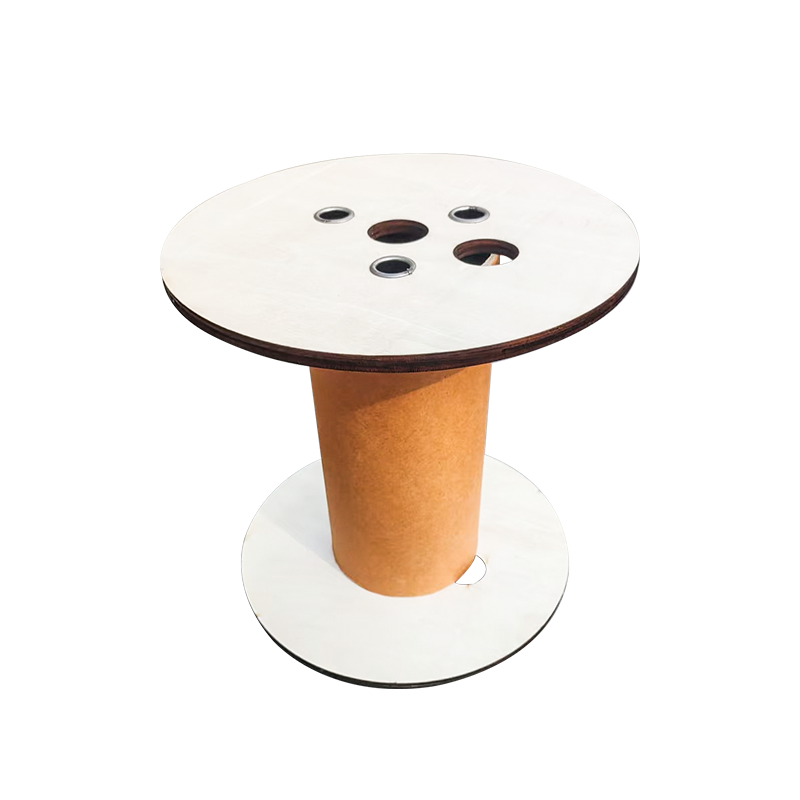
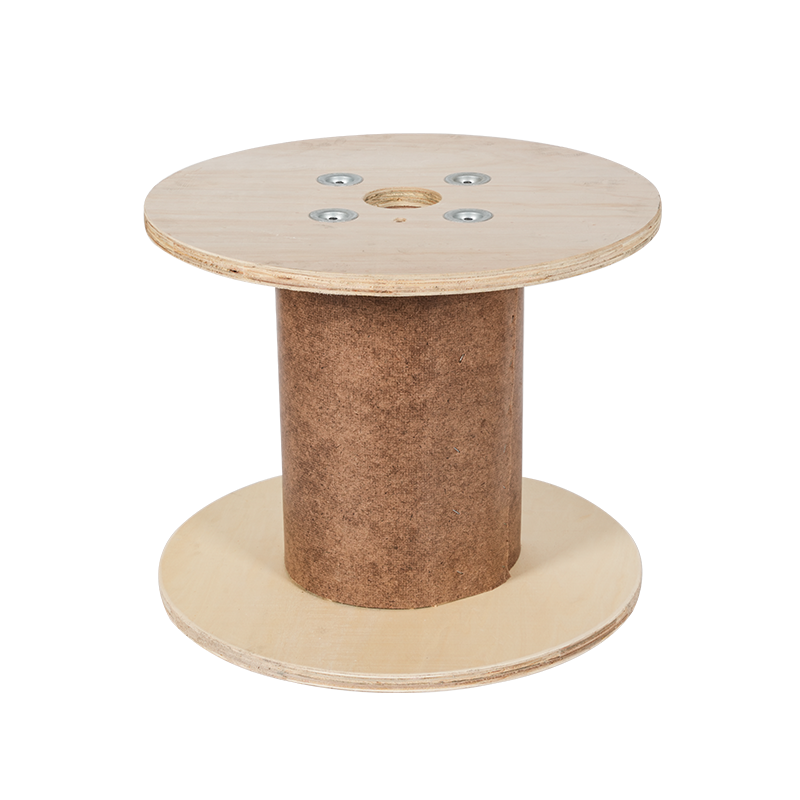 Bleached Poplar Plywood Large Cable ReelExport-ready bleached poplar plywood reel with whole-veneer core and E0/E1 certification; 650–1300 mm disk sizes support cable packaging without fumigation.View Product →
The cost that never appears in the quotation: a drum that fails in transit is not a packaging problem, it is a respooling project. Restringing a 2.5 t cable in a port yard costs many times the difference between plywood and solid wood.
Solid wood drums need ISPM 15 treatment and an IPPC mark; plywood, paper and plastic drums are treated as processed material and ship without it.
For solid wood, the practical details are these:
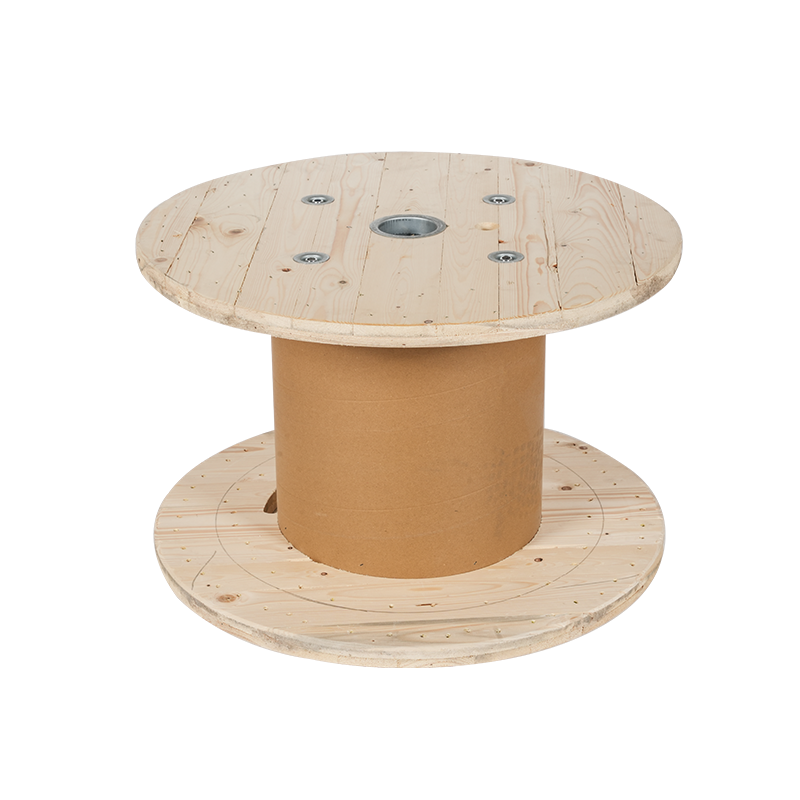 Imported Spruce Solid Wood Fumigated Cable ReelFor yard handling and export quarantine compliance, this ISPM 15 fumigated spruce reel offers 650–1300 mm disks and customizable openings and printing.View Product →
Most crane cable reel failures happen in the yard rather than on the crane, and they trace back to how the drum was lifted, stored or rolled.
Storage detail worth repeating: a drum that has rolled freely across a yard has almost certainly taken a blow to the cable on one side of the pack. That damage is invisible until the cable is paid out and the jacket is already crushed.
The full sequence, including cradle options and stacking limits, is covered in this guide to cable drum handling and storage.
A complete crane cable reel order states six things, and leaving any of them out pushes the decision back onto the supplier.
Send the cable datasheet with the enquiry. Diameter and weight from the manufacturer remove the guesswork that causes most re-specification cycles, and they let the drum be matched to the transport, not the other way round.
For large or repeat volumes, the fastest way to settle questions on plywood grade, flange thickness and treatment records is to see the line itself; a factory visit answers in an hour what email exchanges stretch over weeks.
A crane cable reel usually means the powered take-up device mounted on the crane, while a cable drum is the wooden, plywood, paper or plastic spool the cable is delivered on. The two are specified separately and bought from different suppliers.
At least 15 times the cable outside diameter for static storage and 20 to 25 times where the cable will be flexed repeatedly. Undersized barrels force the cable past its bend radius and shorten service life well before the jacket shows visible cracking.
Solid wood drums do, under ISPM 15, which requires heat treatment at 56 degrees Celsius for 30 minutes at the core plus the IPPC mark. Plywood, paper and plastic drums are processed materials and are exempt from the wood packaging requirement.
They suit light to medium loads rather than multi-tonne power cable. Paper works well for single-trip delivery and recycling programmes, while sealed plastic drums are the better answer where damp storage conditions threaten the cable insulation.
Related Products

Contact us
Address
No. 19, Hualong Industrial Park, Linglong Street, Lin'an District, Hangzhou City, Zhejiang Province, China
Phone
+86-13357115977
QR CODE
 Cable Reel Manufacturers, Cable Packaging Reel Factory

 English
 中文简体