Oct 15, 2026
Content
A 15 A, 12 AWG extension cord costs about 20 US dollars. The roller it lives on decides whether that cord survives three winters in a service van or gets replaced every spring. Extension wire rollers come in three practical families: retractable spring units, hand-crank drums, and shop-built rollers built around a plywood or plastic cable drum. The wrong choice shows up months later as kinked conductors, warm plug bodies, or a hub that splits under load.
Retractable spring reels are the right answer for one job: short, frequent pulls from a fixed indoor position. Everything else belongs on a crank drum or a shop-built roller.
A retractable unit typically stores 15 m to 25 m of 16 or 14 AWG cord and pays it back in a single pull, but the hub hides a spring and a slip ring. Slip rings add contact resistance, and resistance turns into heat whenever the roller sits at the top of a circuit. Run a 15 A tool through a 16 AWG slip-ring unit at full load and the housing warms up within ten minutes.
A drum has no electrical joint at all. The cord passes through a slot in the flange and connects straight to the plug, which is why 12 and 10 AWG cord almost always ends up on a drum or a roller someone built in the shop.
Four figures decide the design: conductor gauge, cord length, hub diameter relative to the cord's outside diameter, and the load the axle carries.
Single-layer winding pays out cleaner than multi-layer winding. On a 250 mm hub the circumference is about 0.79 m, so 15 m of 12 AWG needs roughly 19 turns and a 190 mm gap. A second layer doubles the length but presses the inner turns flat, and that set becomes a loop every time the cord is pulled.
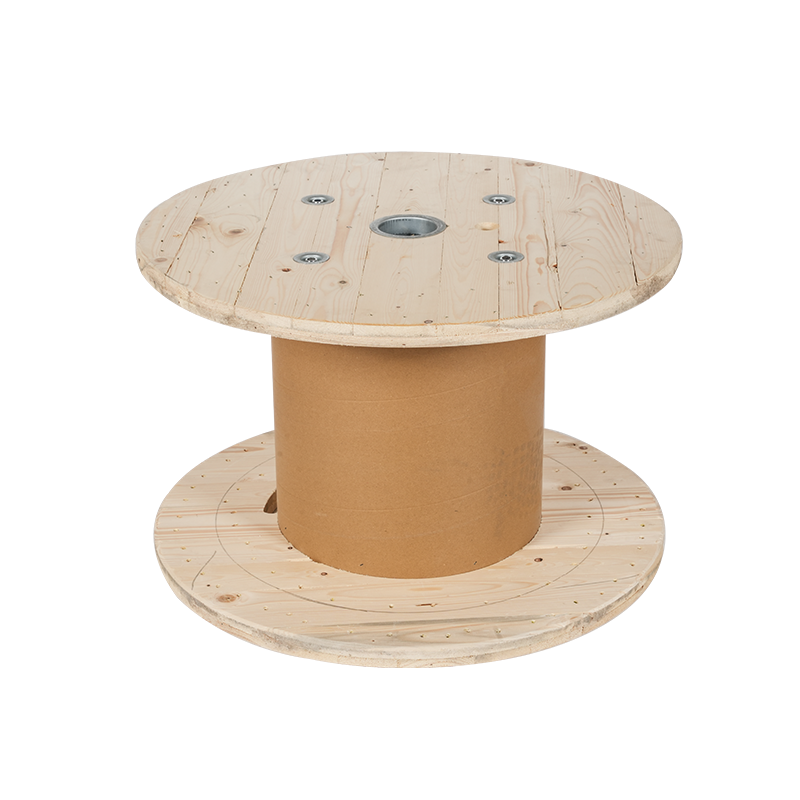
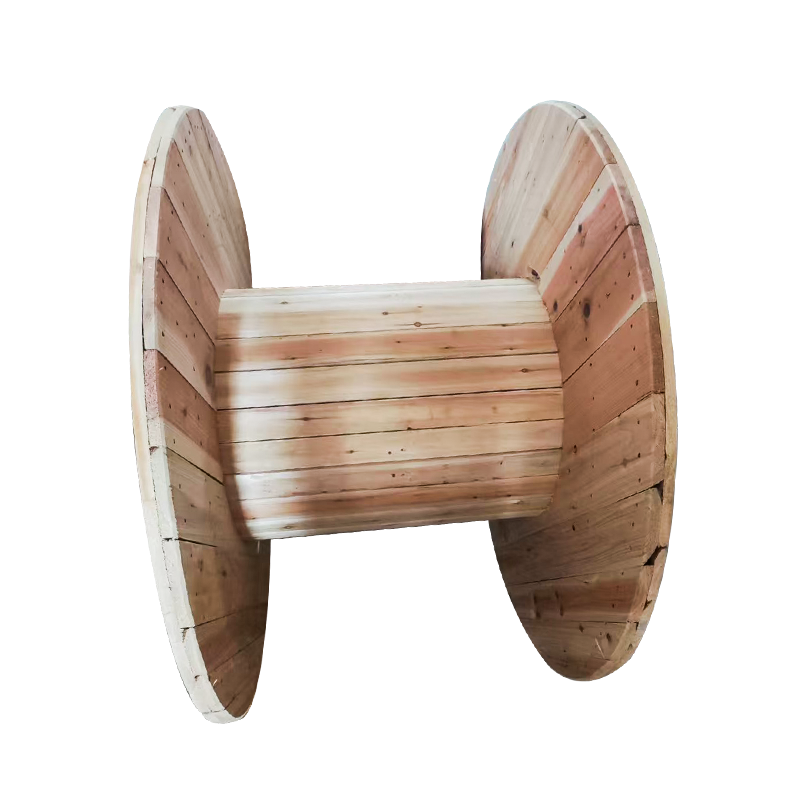
Plywood and plastic cover almost every cord-storage job, paper suits light portable winders, and fumigated solid wood is reserved for heavy cord and export loads.
| Material | Best use | Limits to watch | Typical hub diameter |
| Moistureproof plastic | Damp vans, wash bays, outdoor sites | Softens above 60 C, can crack in deep frost | 150 to 300 mm |
| Plywood | Shop and site storage, easy to repair | Flange edges swell if the reel sits in water | 200 to 500 mm |
| Paper | Portable indoor winders, light cord | No impact or wet duty | 150 to 300 mm |
| Fumigated solid wood | Heavy 10 and 12 AWG cord, export loads | Weight, plus heat treatment for cross-border shipping | 400 to 800 mm |
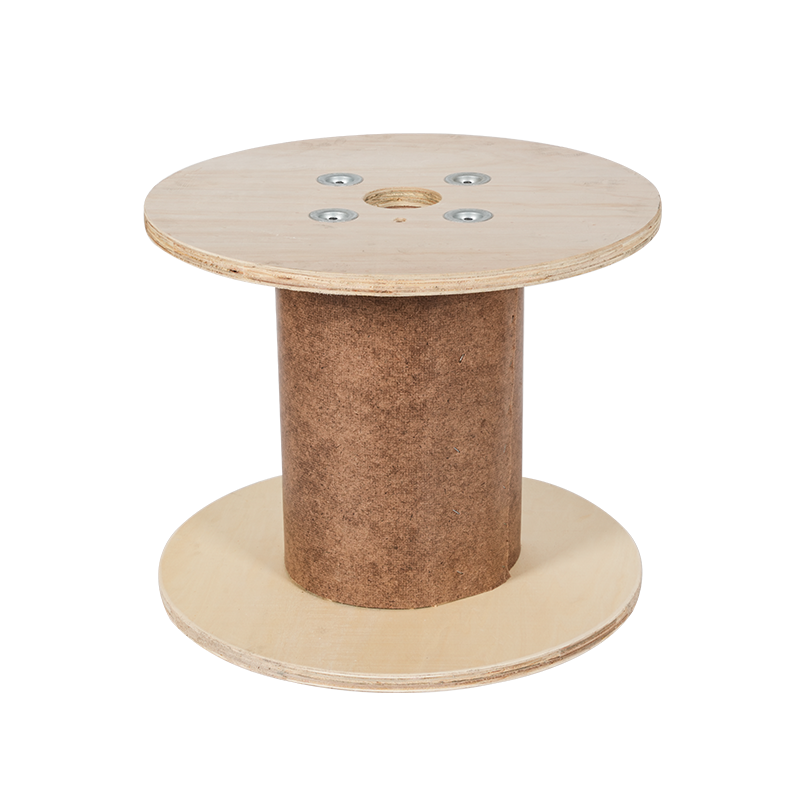
A plywood reel is the usual starting point for a shop-built winder. It carries 15 m of 12 AWG without flange deflection, repairs with a screwdriver and a sanding block, and costs far less than any retractable housing.
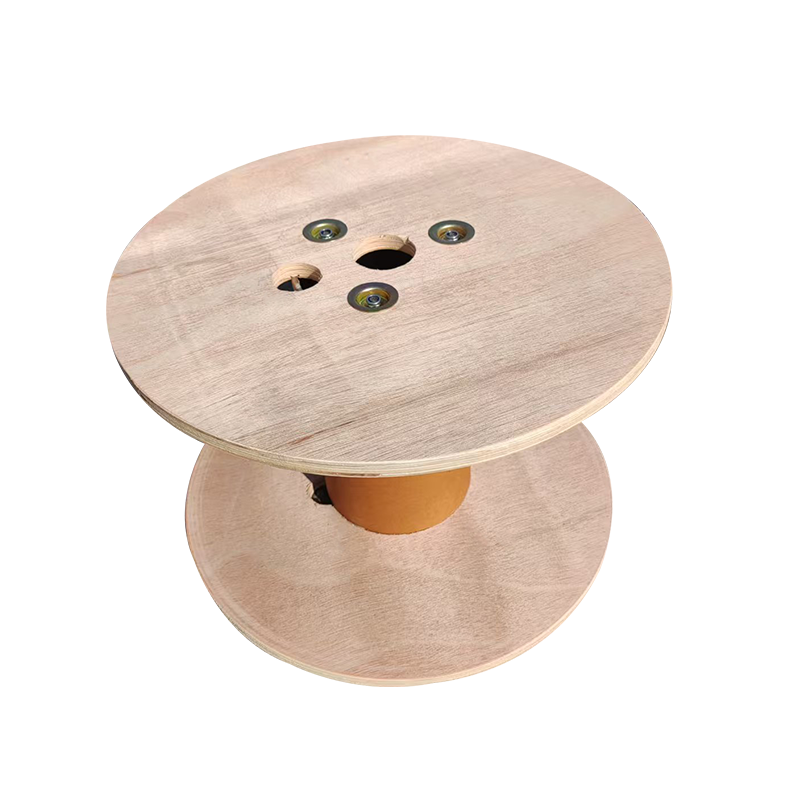 Okoume-Faced Plywood Small Cable ReelA small plywood cable reel for winding and storing cords, with Okoume-faced discs, customizable diameters and tube cores; a shop-built winder option.View Product →
Most extension cords fail at the two ends rather than in the middle, and the winding method decides which end goes first.
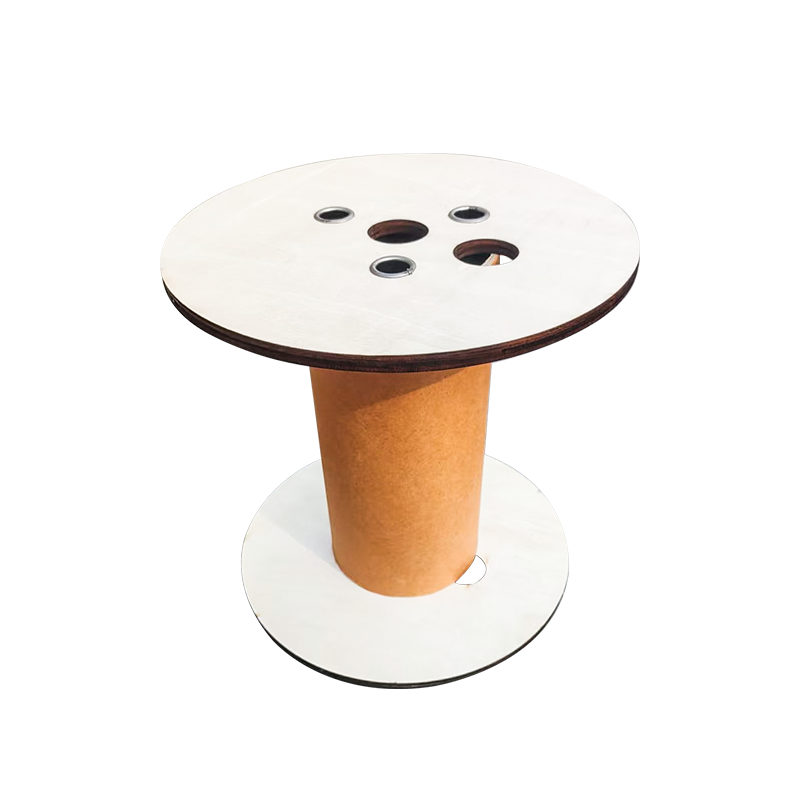
For a winder that travels to every job, a lightweight paper reel holding 15 m of 16 AWG cord adds almost nothing to the tool bag and can be recycled when the cord goes. The full breakdown of winder types, winding methods, storage and safety sits in our extension cord winder guide.
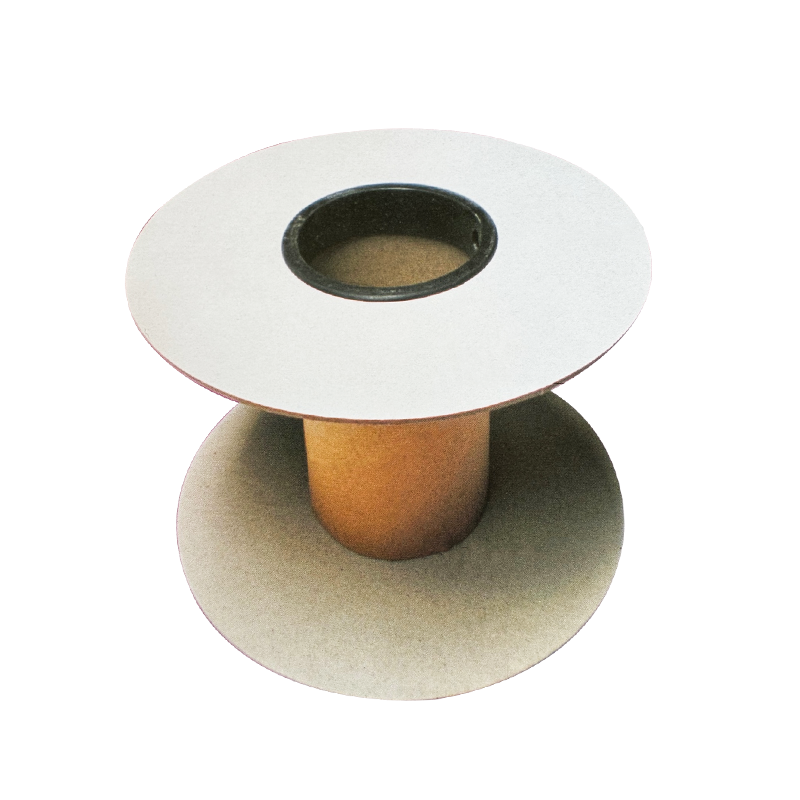 Lightweight Recyclable Paper Cable ReelA lightweight, recyclable paper reel for winding and storing light cables, supporting printing and lamination; suited to portable cord-winder setups.View Product →
Check three things before price: the cord's ampacity rating, the axle and bracket that carry it, and whether the roller lets the cord run cool when fully wound.
Where the roller lives outdoors or in a wash bay, a moistureproof plastic drum keeps the cord dry and does not swell when it gets rained on.
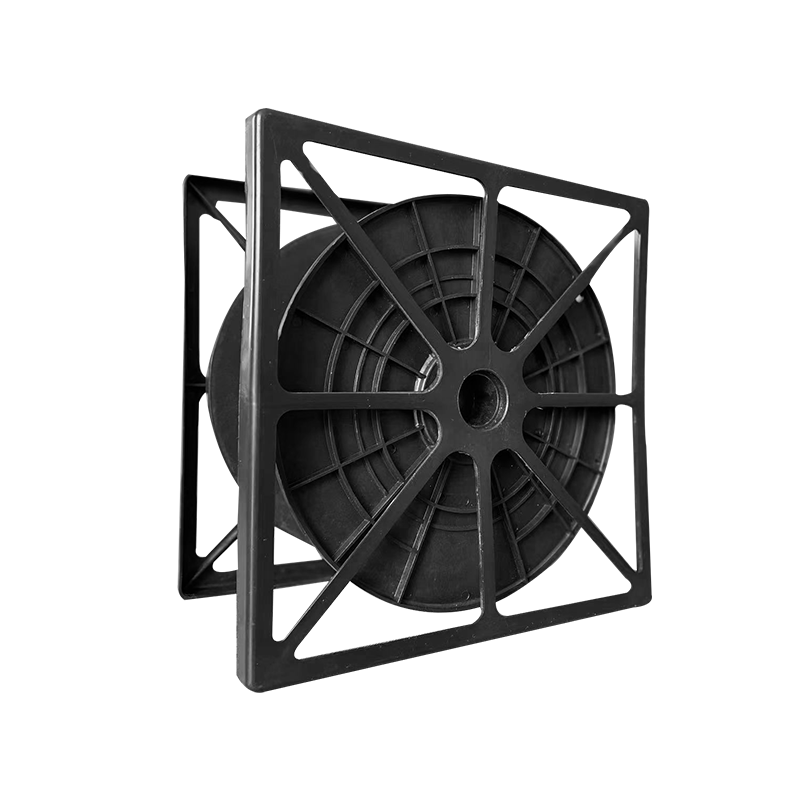 Moisture-Proof Plastic Cable Storage ReelA lightweight, corrosion-resistant plastic reel for cable storage and transport, made from ABS, PP, or polyethylene; useful in damp outdoor or wash-bay settings.View Product →
Yes, if the hub is at least ten times the cord's outside diameter and the axle spins freely. Small plywood and paper reels already sit in that range for 15 m of 16 to 12 AWG cord, while oversized drums only add weight.
About 15 m of 12 AWG in a single layer with a 190 mm flange gap. Adding layers roughly doubles the length, at the cost of more pressure on the inner turns and more stored memory in the jacket.
Not by itself. The cord runs through a flange slot and connects straight to the plug, so its rating is untouched. Retractable units add a slip ring and a closed housing, and both make a fully wound cord run warmer.
Moistureproof plastic or coated plywood. Paper absorbs water and loses stiffness, and bare solid wood moves with humidity unless it has been treated and sealed.
Related Products

Contact us
Address
No. 19, Hualong Industrial Park, Linglong Street, Lin'an District, Hangzhou City, Zhejiang Province, China
Phone
+86-13357115977
QR CODE
 Cable Reel Manufacturers, Cable Packaging Reel Factory

 English
 中文简体
中文简体