Apr 10, 2026
Content
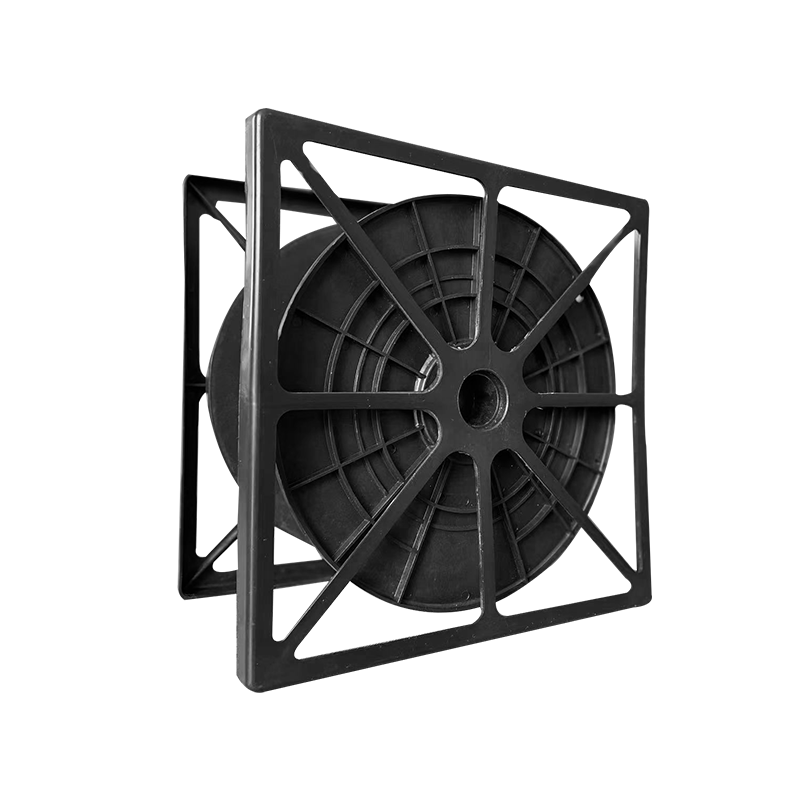
Plywood cable reel deliver measurable efficiency gains across manufacturing, storage, and transportation stages. These wooden drums reduce raw material consumption by approximately 30% compared to solid wood alternatives while maintaining the structural integrity required for heavy cable loads. Their lightweight construction cuts transport costs and simplifies handling without compromising durability.
The engineered layered structure of plywood provides consistent strength properties that solid wood cannot match. This uniformity allows manufacturers to standardize reel specifications and predict performance accurately under various load conditions.
Plywood manufacturing utilizes veneer sheets glued in cross-grain patterns, maximizing timber yield from each log. Production facilities report 40% higher material efficiency when switching from solid wood to plywood reel construction. This efficiency translates directly to lower per-unit costs and reduced environmental impact.
A standard plywood cable reel weighs 25% to 40% less than equivalent steel or solid wood drums. This weight reduction creates compound savings throughout the supply chain. Freight companies charge by weight, and lighter reels allow more cable product per truckload. A typical transport scenario shows plywood reels enabling 15% more cable capacity per shipment compared to steel alternatives.
| Material Type | Average Weight (kg) | Relative Efficiency |
|---|---|---|
| Solid Wood | 85 | Baseline |
| Plywood | 52 | 39% lighter |
| Steel | 120 | 41% heavier |
Plywood reels arrive at cable manufacturing facilities as precision-engineered components ready for immediate assembly. Pre-cut flanges and standardized barrel sections reduce assembly time by 50% compared to on-site solid wood fabrication. This standardization eliminates variability that causes production delays.
Industrial plywood production follows strict quality controls. Each reel component meets specified moisture content, density, and strength parameters. Cable manufacturers benefit from rejection rates below 2% for plywood reels versus 8% to 12% for locally sourced solid wood alternatives. Lower rejection rates mean fewer interruptions and more predictable production schedules.
The dimensional stability of plywood prevents the warping and cracking common in natural wood. This stability ensures reels maintain circular integrity during high-speed cable winding operations, reducing cable damage and rewind incidents.
Plywood reels feature standardized dimensions that maximize warehouse space utilization. Their uniform geometry allows stacking heights 20% greater than irregular solid wood reels. Warehouses report gaining approximately 15% additional storage capacity after transitioning to standardized plywood reel inventories.
Lower weight enables handling with standard forklifts rather than heavy-lift equipment. Facilities using plywood reels report equipment cost savings of 18% annually and reduced maintenance schedules. The lighter weight also decreases worker injury rates associated with manual repositioning and assembly operations.
Plywood reel production generates 60% less wood waste than solid wood drum manufacturing. The veneer-based construction process uses nearly every portion of harvested timber. Additionally, plywood reels are repairable and recyclable. Damaged flanges can be replaced individually rather than discarding entire reels.
Many plywood reels incorporate certified sustainable timber sources. Chain-of-custody documentation supports corporate environmental compliance requirements. The lighter transport weight also reduces fuel consumption and associated carbon emissions throughout distribution networks.
Cable manufacturers implementing plywood reel systems report total cost reductions of 20% to 35% across procurement, handling, and logistics operations. These savings compound over multiple product cycles. The durability of properly maintained plywood reels supports 8 to 12 reuse cycles in closed-loop return systems, further amortizing initial investment.
The combination of lower material costs, reduced transport expenses, streamlined handling, and environmental compliance makes plywood reels the economically superior choice for cable industry operations seeking measurable efficiency improvements.
Related Products

Contact us
Address
No. 19, Hualong Industrial Park, Linglong Street, Lin'an District, Hangzhou City, Zhejiang Province, China
Phone
+86-13357115977
QR CODE
 Cable Reel Manufacturers, Cable Packaging Reel Factory

 English
 中文简体
中文简体