Jul 31, 2026
Content
Heavy power cables and fiber optic coils routinely exceed 5 tons per reel. Wooden drums that warp under that load split cable jackets and derail entire shipment schedules. A well-engineered plywood cable drum eliminates that risk from the start—it combines structural rigidity with a fraction of the weight of steel, while meeting international phytosanitary rules without added chemical dips. Understanding exactly what makes these drums reliable allows engineers and procurement managers to specify the right reel before a single meter of cable is wound.
Steel drums handle extreme loads but add deadweight—often 40% more than an equivalent plywood drum—which increases freight costs on every container. Plastic drums resist moisture but fail under the crushing hoop stress of heavy bundled conductors. Plywood cable drums deliver the highest strength-to-weight ratio among reel materials, making them the default choice for export-bound power and telecom cables.
Three practical advantages drive that preference:
Engineers also favor plywood because consistent veneer layers provide predictable bending stiffness. That predictability allows precise flange deflection calculations when a drum is loaded to its rated capacity.
Not all plywood drums are equal. The difference between a reel that survives three transpacific voyages and one that delaminates after the first unspooling lies in material selection and assembly precision.
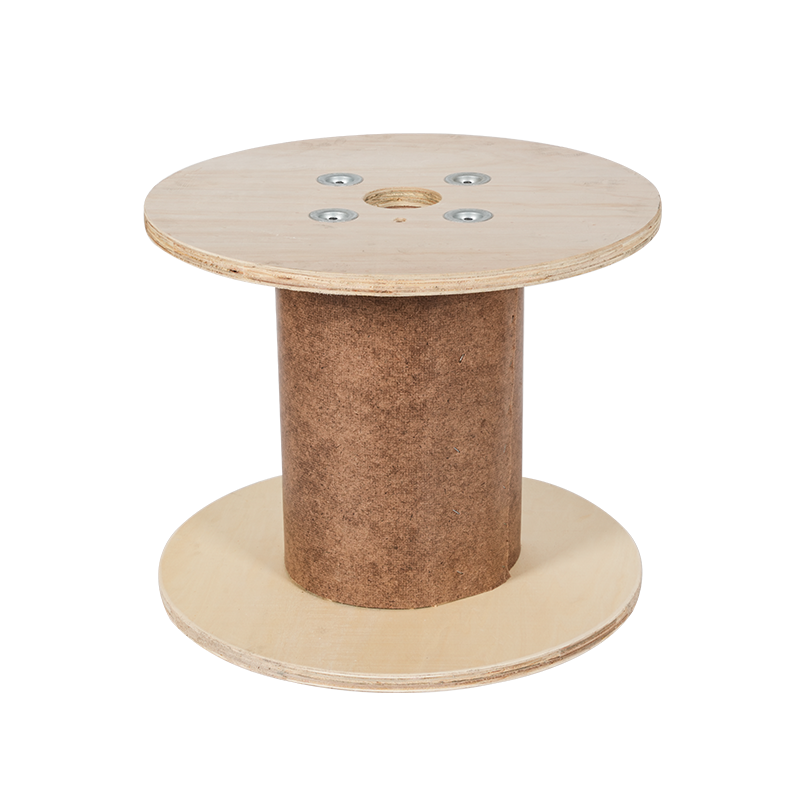
Industrial-grade drums start with hardwood veneers—typically poplar, birch, or eucalyptus—cross-laminated with moisture-resistant phenolic or melamine-urea adhesives. A minimum of 5 plies for flange diameters below 1000 mm and 9 plies for larger drums prevents warping under load. Flanges must be cut from mill-certified plywood sheets with zero core gaps; voids create failure points under cable tension.
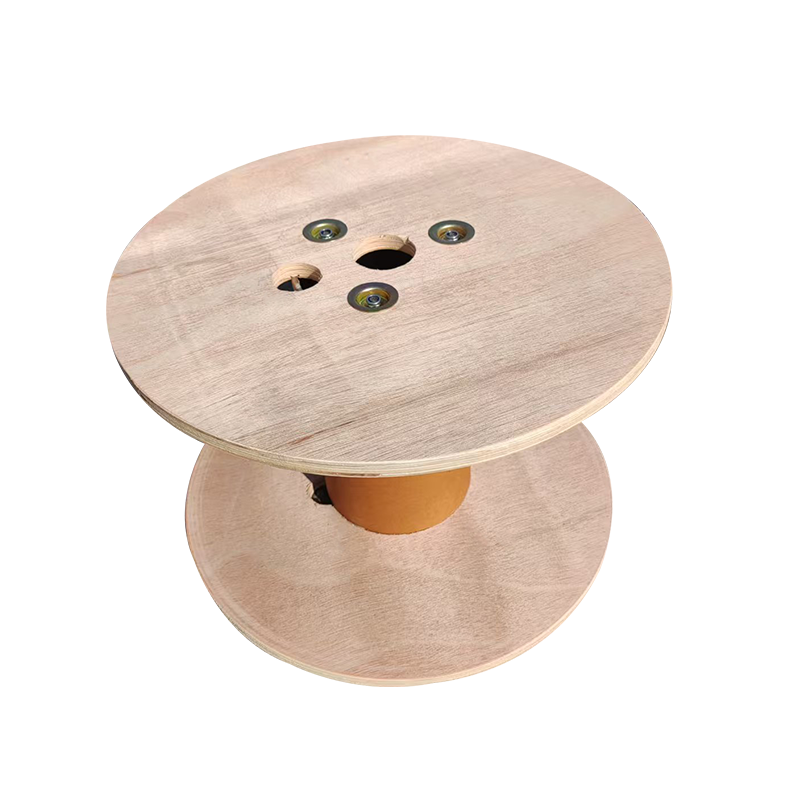
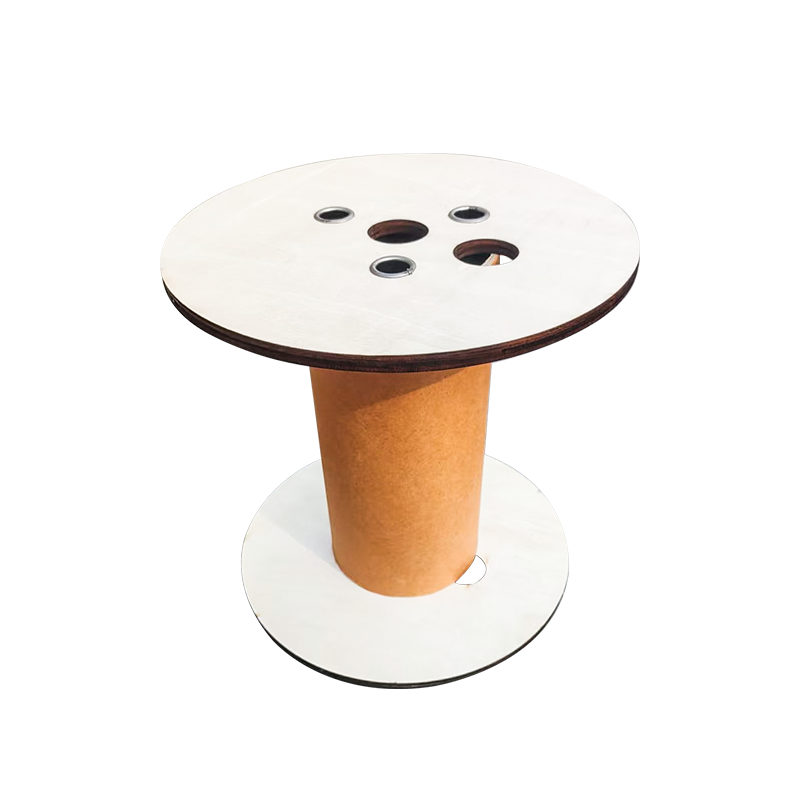
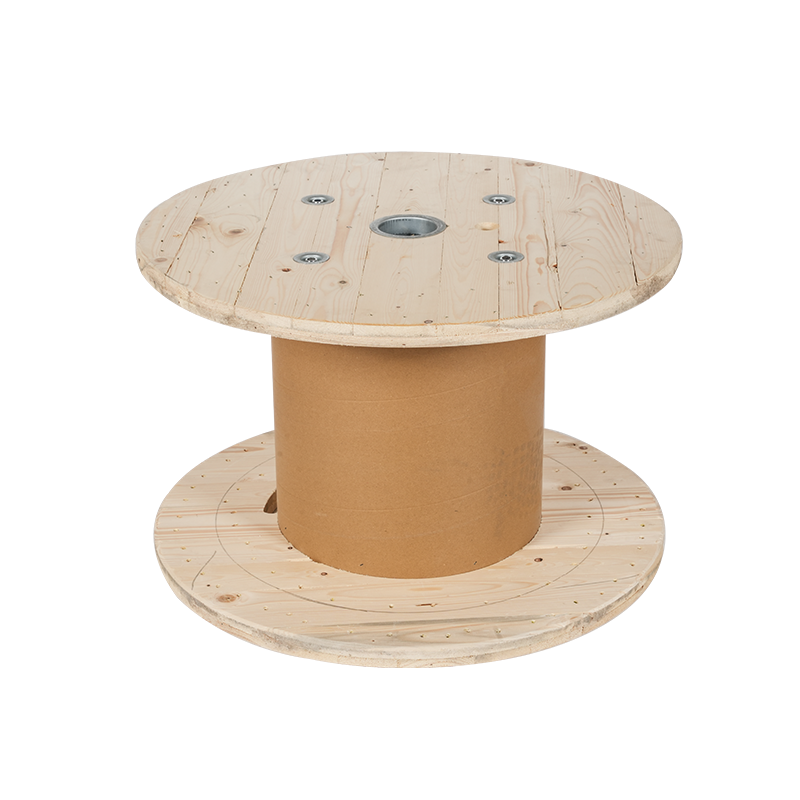
Center barrels use either solid wood staves or thick plywood tubes, bolted to flanges with galvanized through-bolts and reinforced with steel backing plates. Bolt torque values directly control drum rigidity. Reputable factories follow a sequenced tightening pattern and often apply thread-locking compound to prevent loosening during vibration.
A single coat of primer is insufficient for drums that will sit dockside in tropical humidity. Export-grade drums receive two coats of weather-resistant alkyd paint, with edges sealed against moisture ingress. Stenciled identification marks—drum number, cable type, length, gross weight—use permanent UV-resistant ink to remain legible after months in outdoor storage.
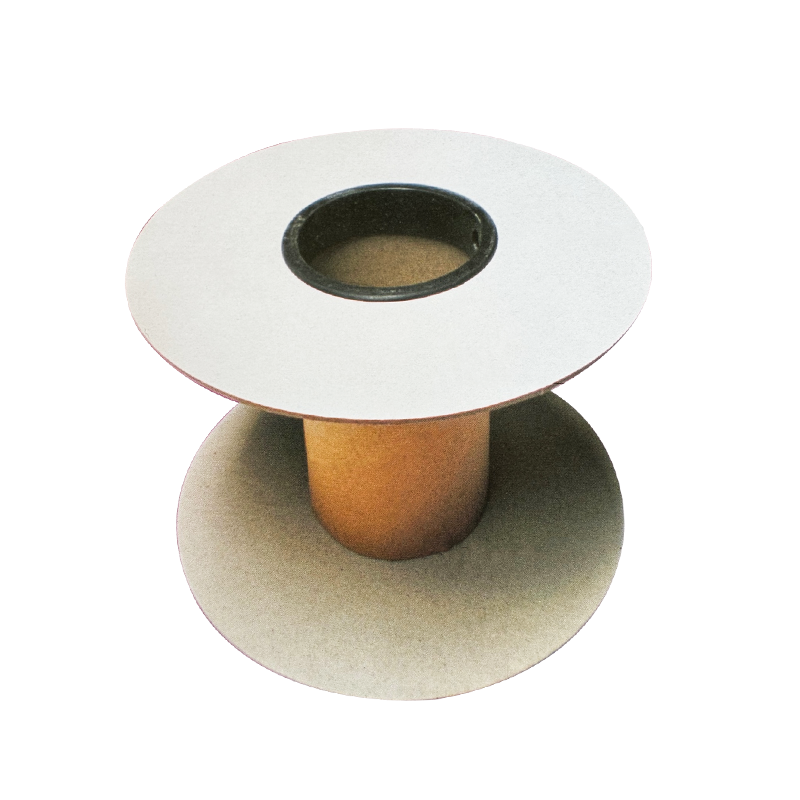
Choosing drum geometry means balancing barrel diameter against bending radius limits of the cable and matching flange width to the winding capacity needed. Undersized barrel diameters bend conductors beyond their minimum radius, damaging insulation. Oversized drums waste pallet space and increase shipping costs.
The table below lists common export drum dimensions and their typical safe working loads. These values assume hardwood plywood construction with bolted steel reinforcements.
| Flange Diameter (mm) | Barrel Diameter (mm) | Width (mm) | Approx. Load Capacity (kg) |
|---|---|---|---|
| 800 | 400 | 500 | 1,200 |
| 1000 | 500 | 600 | 2,000 |
| 1200 | 600 | 700 | 3,200 |
| 1400 | 700 | 900 | 5,000 |
| 1600 | 800 | 1000 | 7,500 |
Custom diameters up to 2500 mm are available for submarine cable and high-voltage transmission projects. Always confirm actual test values with the manufacturer, as load ratings vary with plywood grade and flange thickness.
Solid wood packaging moving between continents must comply with ISPM 15 to prevent pest spread. Plywood is classified as a processed wood material—it does not require fumigation if it uses heat-treated veneers and approved adhesives. Every plywood cable drum shipped internationally should carry a legible ISPM 15 mark on the flange or barrel, indicating the production facility's registration number and treatment method. This single stamp avoids quarantine holds that can cost thousands of dollars per day in demurrage.
Verification steps for buyers:
The material choice shines brightest when cables are long, heavy, and destined for long-distance transport. Specific use cases where plywood drums outperform alternatives:
When sourcing plywood cable drums, especially for repeat export orders, factory capabilities matter as much as the material spec. Look for a manufacturer that controls the full production chain—veneer selection, glue mixing, CNC flange cutting, assembly, and painting—under one roof. This prevents variation between batches that can cause drum failure in the field.
Facilities with ISO 9001-certified quality systems typically perform load testing on sample drums up to 1.5 times their rated capacity and track bolt torque and plywood density in batch records. They also offer custom printing, pre-assembled bolt kits, and knock-down shipping options that reduce container space. Consistency is the real value—every drum must carry its rated load without exception, because field re-spooling costs far more than the drum itself.
Related Products

Contact us
Address
No. 19, Hualong Industrial Park, Linglong Street, Lin'an District, Hangzhou City, Zhejiang Province, China
Phone
+86-13357115977
QR CODE
 Cable Reel Manufacturers, Cable Packaging Reel Factory

 English
 中文简体
中文简体