Aug 07, 2026
Content
A typical plastic cable drum weighs roughly half as much as an equivalent wooden drum, shrugs off rain and forklift impacts, and never needs fumigation before an overseas shipment. For procurement teams that have already paid for water-damaged flanges or ISPM 15 treatment certificates, that combination is usually enough to make plastic the default choice. The practical question for buyers is no longer whether plastic cable drums work well; it is which specification fits the job and where the material still does not make sense.
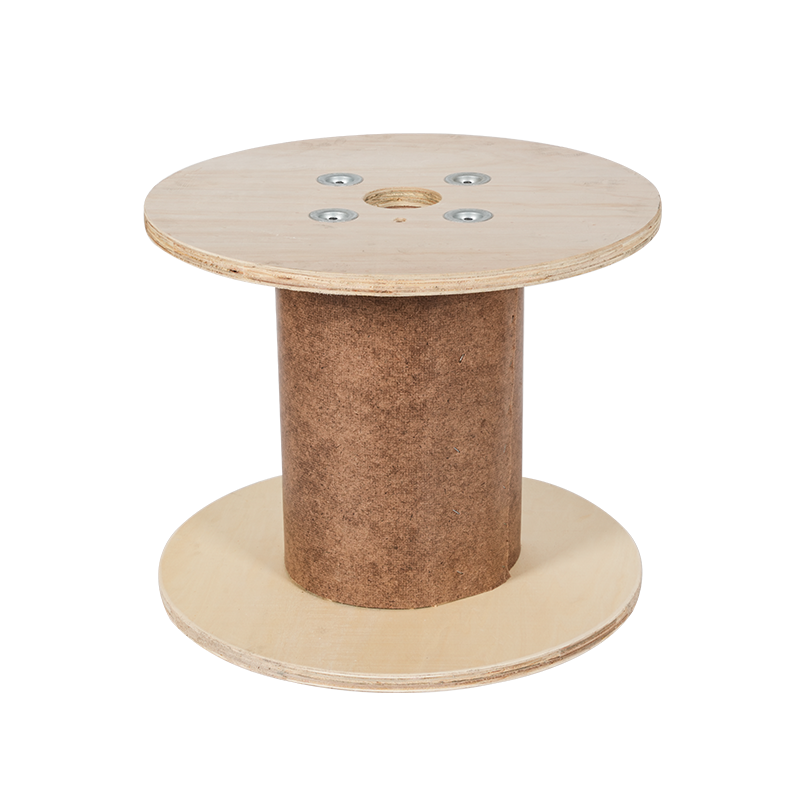
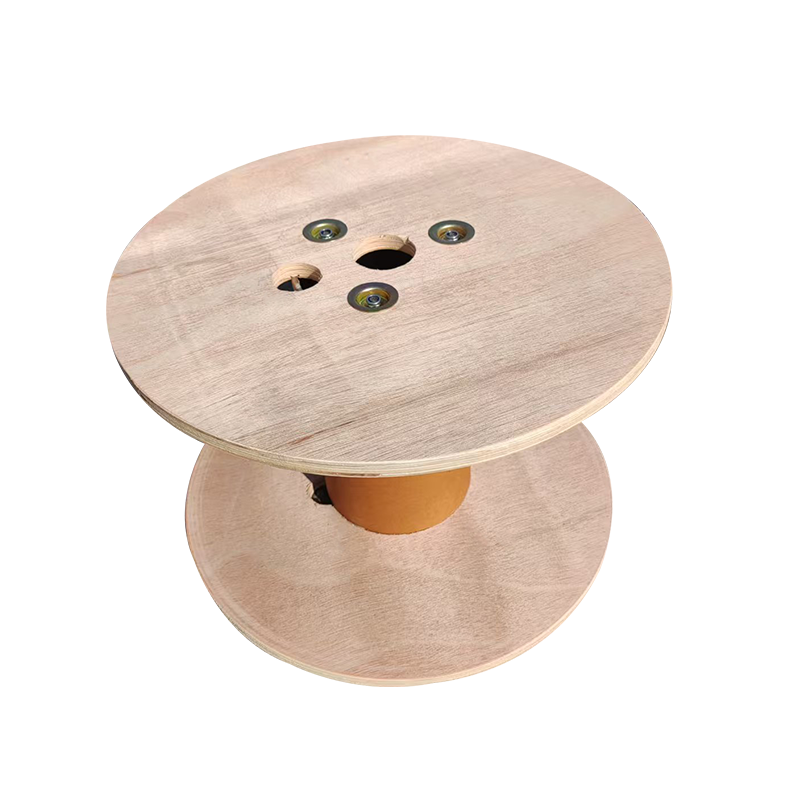
Put simply, a plastic cable drum is a spool made from molded thermoplastic and used to wind, store, transport, and pay out cable or wire. Because the drum is engineered rather than assembled from separate timber sections, every flange and every barrel joint is predictable and repeatable, and free of the knots and moisture content you get with natural wood.
Most plastic cable drums are injection-molded from high-density polyethylene (HDPE) or polypropylene (PP). HDPE is the more common choice for heavy-duty and export drums because of its stiffness and impact strength; PP is often selected where weight and chemical resistance matter more. Additives such as UV stabilizers and anti-static agents can be compounded directly into the resin, which is a real advantage over painted wood surfaces that crack and peel.
Manufacturing quality matters because the drum's performance depends on wall thickness uniformity, gate placement, and cooling control in the mold, not on a worker's skill with a hammer. A reliable manufacturer provides load test data and a dimensional drawing so that flange diameter, barrel diameter, and arbor hole match your cable core and pay-out equipment.
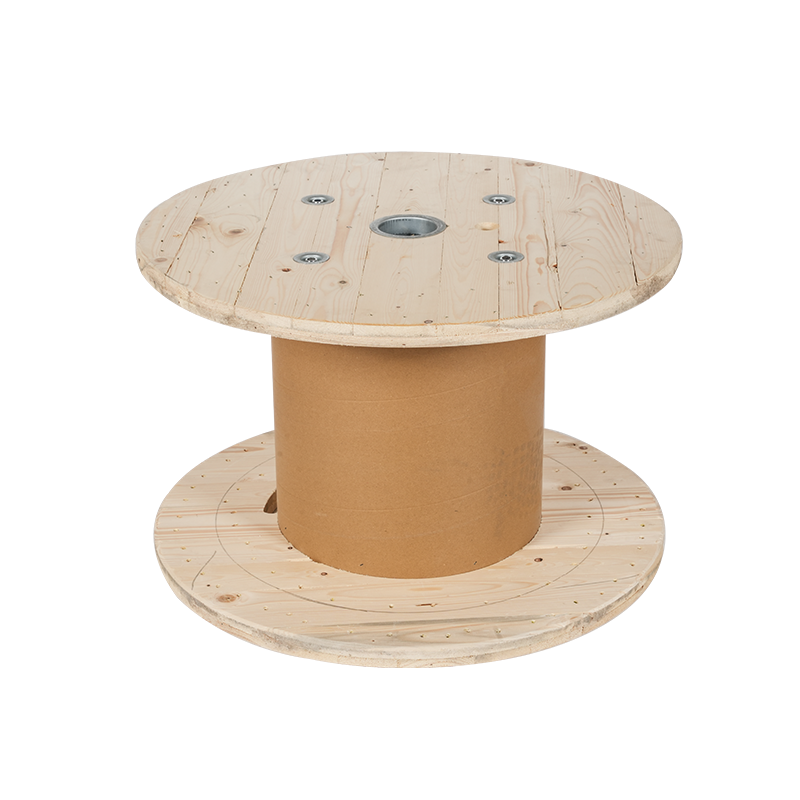
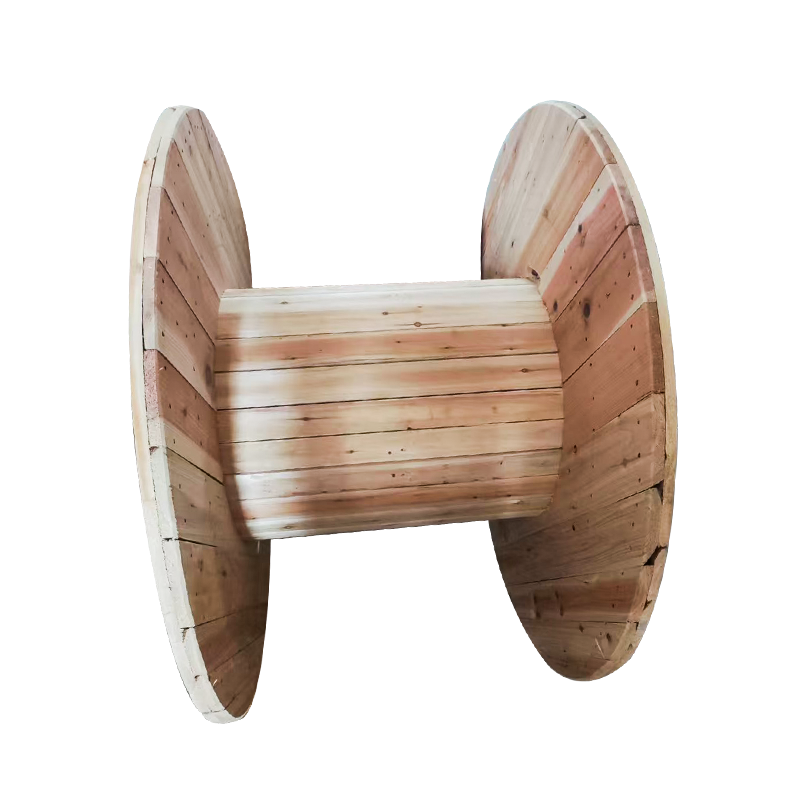
One of the first questions buyers ask is how a plastic drum compares with a wooden reel. The honest answer is that wood still has a place in heavy one-way shipments where the drum is scrapped or returned, but plastic wins in a growing number of cost and durability calculations.
| Property | Plastic Cable Drum | Wooden Cable Drum |
|---|---|---|
| Moisture resistance | Resistant to rain, humidity, and standing water; flanges do not swell | Requires dry storage; moisture can swell plywood and loosen fasteners |
| Export treatment | No ISPM 15 fumigation required | Needs heat treatment or fumigation for international shipments |
| Weight | Lighter, reducing freight and handling costs | Heavier, increasing transport cost and lifting strain |
| Impact resistance | Flanges flex and recover under moderate impact | Can crack, split, or dent on impact |
| Reusability | Consistent performance over multiple trips | Durable, but more prone to damage during repeated handling |
| End-of-life | Recyclable thermoplastic materials | Can be repaired, but treated wood is harder to recycle |
| Customization | Molded-in color, logo, and marking options | Usually painted or labeled after assembly |
The differences in the table translate directly into procurement decisions. If a shipment crosses a border, plastic saves treatment cost and eliminates the risk of customs rejection. If drums sit outdoors on a construction site, plastic keeps its dimensional stability. For a more detailed comparison, read how plastic cable drums differ from wooden reels in practice.
In a cable factory, drums are wound, inspected, stored, moved, and split into smaller lengths. Plastic drums with smooth flanges reduce the risk of snagging and keep the cable ends clean. Because the drums are lighter, operators can handle smaller sizes without heavy lifting equipment, which lowers the risk of back injuries and dropped loads.
Moisture is the main enemy of a wooden flange. In container crossings, condensation forms on steel and wood surfaces, and even kiln-dried lumber can gain moisture during the voyage. A plastic drum does not swell, warp, or support mold growth. For this reason, the moistureproof plastic cable reel is the model we recommend most often for overseas orders, especially when the transit route passes through ports with high humidity.
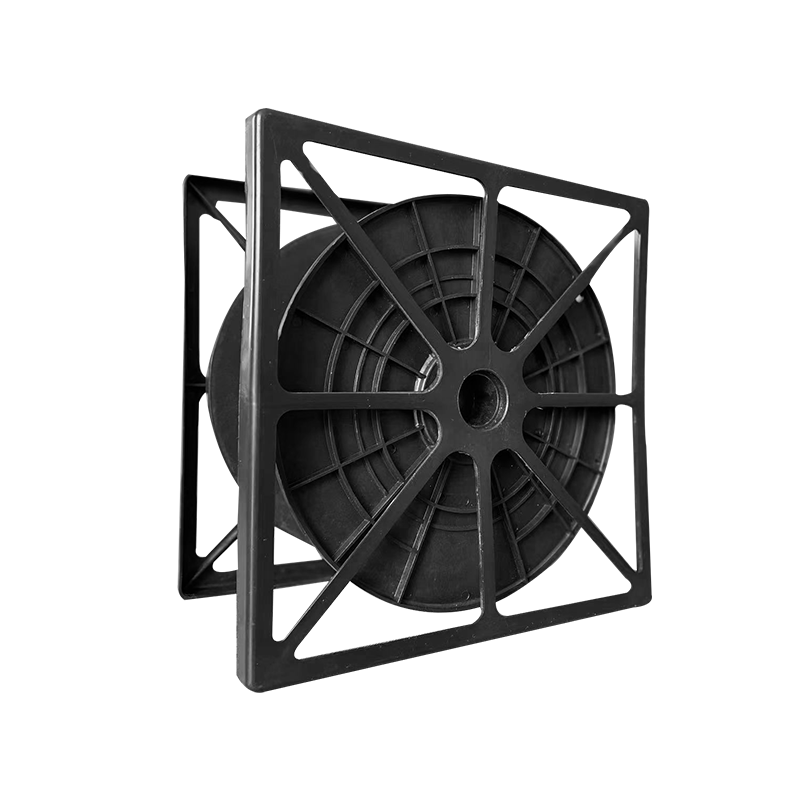 Moisture-Proof Plastic Cable Reel Suppliers, Custom FactoryHangzhou Lin'an Yimin Cable Reel Factory is China Custom Moisture-Proof Plastic Cable Reel Suppliers and Factory,A plastic cable reel is ...View Product →
Beyond exporting, plastic cable drums are widely used in power, telecommunications, construction, petrochemical, and mining projects, particularly where cables are paid out directly from the drum into trenches, cable trays, and ladder racks. They also suit temporary installations and event power distribution, where speed of set-up and clean appearance matter.
Specify the mechanical properties before comparing prices. A cable drum is a packaging structure that carries a live load, and selecting by price alone leads to flange failure, cable damage, and rejected deliveries.
In practice, most buyers start with the cable core weight and outside diameter and work backward to flange size. The full plastic cable drum product range on our website lists the available configurations, and our engineers can provide a specification sheet based on your cable type and shipping method.
China Wholesale Plastic Cable Drum Manufacturers, FactoryAs a China Custom Plastic Cable Drum Manufacturers and Plastic Cable Drum Factory, Hangzhou Lin'an Yimin Cable Reel Factory supply wholes...View Product →
For a deeper look at the structure, applications, and maintenance intervals that rarely fit into a data sheet, our comprehensive analysis of plastic cable drum structure and maintenance covers the details worth checking before you place an order.
Plastic simplifies storage because flanges will not swell after a week of rain. The cable itself still needs protection: store drums on level, well-drained ground, keep the cable ends sealed, and avoid blocking drainage. If drums are stacked, follow the manufacturer's stacking limit, because molded flanges have defined load limits just like timber ones.
Lift larger drums by the arbor hole with a properly rated spreader bar, never by the flanges alone. When rolling a drum is unavoidable, roll it in the direction marked on the flange and control the speed. A drum that tips over can injure a worker and damage the cable, so the same rules that apply to wooden drums still apply. The storage and handling guide for cable drums lists the precautions used by electrical contractors and warehouse teams in practice.
Plastic cable drums are only as good as the mold, the resin, and the quality control behind them. A factory with 24 years of experience building cable drums and other packaging products has the tooling knowledge to avoid warpage, sink marks, and weak ribs. Our 5,000-square-meter production facility in Hangzhou has an annual capacity of five million cable drums and related products, which means large customers get consistent lead times rather than one-off samples.
Export buyers also benefit from a supplier that treats international shipping as routine. About 20% of our output goes to overseas customers, and environmental measures such as exhaust treatment and closed-loop cooling water are part of a production process you can inspect with a factory tour.
If you are specifying a plastic cable drum for a new project, start with the cable core weight and minimum bending diameter, compare dynamic load ratings and barrel dimensions, then ask for the load test report. A drum that survives the road, the port, and the jobsite is the one that costs least in the end.
Related Products

Contact us
Address
No. 19, Hualong Industrial Park, Linglong Street, Lin'an District, Hangzhou City, Zhejiang Province, China
Phone
+86-13357115977
QR CODE
 Cable Reel Manufacturers, Cable Packaging Reel Factory

 English
 中文简体
中文简体