Nov 25, 2026
Content
A 25 ft, 16 AWG retractable cord reel is typically sold as a 13 A unit, and that figure assumes the cord is pulled fully off the drum. Pull 12 A through the same reel with most of the cord still coiled, and the jacket runs far hotter than the identical load on a straight cord. That gap between the box rating and the real duty cycle accounts for most melted cord stops, nuisance breaker trips and returns in this category.
Below is a buyer's view of small retractable extension cords: which parts fail first, which gauge and length combinations are worth stocking, and how the reel or spool that carries the cable is specified. The figures reflect common SJT and SJTW 300 V retail constructions rather than a single brand catalogue.
Direct answer: a small retractable extension cord is a cord reel, meaning flexible cord wound on a spring-loaded drum and connected through a rotating contact assembly so power flows while the drum turns.
Because the electrical path passes through moving contacts, a retractable reel is a different product from a plain extension cord with a plastic tie. Six parts decide whether a unit lasts five years or five months:
Direct answer: match AWG to both the load and the extended length, because a 16 AWG cord beyond 25 ft loses voltage well before it ever trips a 15 A breaker.
| Cord size | Common reel length | Rating, fully extended | Realistic load |
| 16/3 SJT | 20 to 25 ft | 10 to 13 A | Lamps, chargers, drills, soldering irons |
| 14/3 SJT | 25 to 40 ft | 13 to 15 A | Shop vacuums, jigsaws, 1.5 kW tools |
| 12/3 SJTW | 40 to 50 ft | 15 to 20 A | Circular saws, portable heaters, compressors |
| 18/2 flat | 10 to 16 ft | 7 to 10 A | Lighting only, no motors |
Length is never free. A 16 AWG conductor at 12 A turns roughly 5 W into heat across a 25 ft run, which is tolerable when air reaches the jacket and dangerous when the cord is wound tight against itself.
Direct answer: a coiled cord cannot shed heat, so treat the printed ampere rating as a ceiling for fully extended use and roughly halve it while the cord is still sitting on the drum.
Two habits cut the risk without changing hardware. Pull out the full length for any continuous load above half the rating, even if the tool sits close to the outlet. Then confirm that the thermal cut-off resets on its own, since manually resettable types are common on industrial units and rare on consumer ones.
Direct answer: fix the working radius first, then the mounting point, then the rewind mechanism, because reversing that order produces reels that hang too low, need a ladder, or drag on the floor.
Ceiling units usually sit 8 to 10 ft above the floor, which puts a 25 to 30 ft cord within reach of most of a two-car garage. Wall reels work better at 4 to 5 ft, at shoulder height, so the cord stop never rests on concrete where grit destroys the jacket.
Winding method drives jacket life more than most buyers expect. Even, overlapping turns avoid the crossed loops that pinch insulation, and a proper extension cord winder guide covers tension and overlap in detail.
Direct answer: bulk flexible cord reaches the assembly line on paper, plastic or plywood reels, and a poor spool choice surfaces later as crushed flanges, flattened cores or moisture-darkened jacket.
Sizing follows one practical rule: keep the barrel diameter at 8 to 10 times the cord's outer diameter so the copper does not take a permanent set, then size the flange to carry the weight. A 100 m length of 3 x 1.5 mm2 flexible cord weighs about 14 kg, which sits comfortably on a 400 mm plastic drum but can bow a light paper flange when reels are stacked three high in a container.
| Material | Moisture behaviour | Reuse and export | Best fit |
| Paper | Absorbs humidity, softens if wet | Recyclable, no treatment needed | Short runs of light 16/3 and 18/2 cord |
| Plastic | Unaffected, suits damp stores | Reusable, heavier to ship back | Retail-ready small drums, humid climates |
| Plywood | Stable with sealed faces | Processed wood, widely exempt from ISPM 15 | Export loads of 25 to 50 kg cable |
Paper reels suit short runs of light cord, where the reel is opened once and recycled. They cost least per unit and clear customs without treatment, but they soften in humid container air and should not carry much above 15 kg.
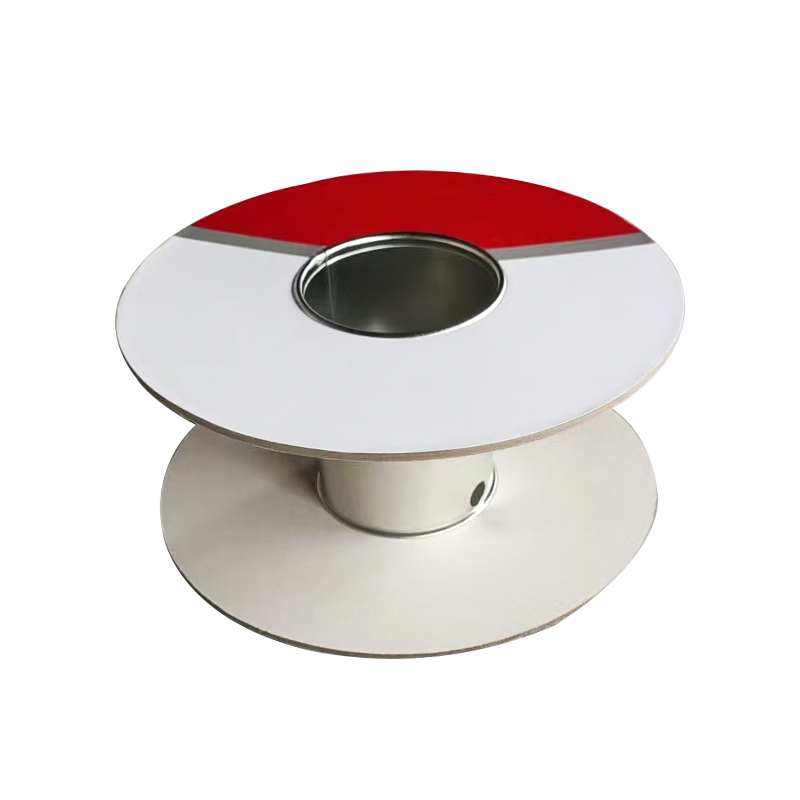 Lightweight Recyclable Paper Cable ReelLightweight paper cable reel for light-duty winding, with recyclable construction and customizable printing or lamination for short-run cable packaging.View Product →
Moistureproof plastic drums are the pragmatic answer for tropical warehouses and retail-ready small reels. The moulded flange resists impact, the barrel stays round after stacking, and the drum can be reused several times before it is scrapped.
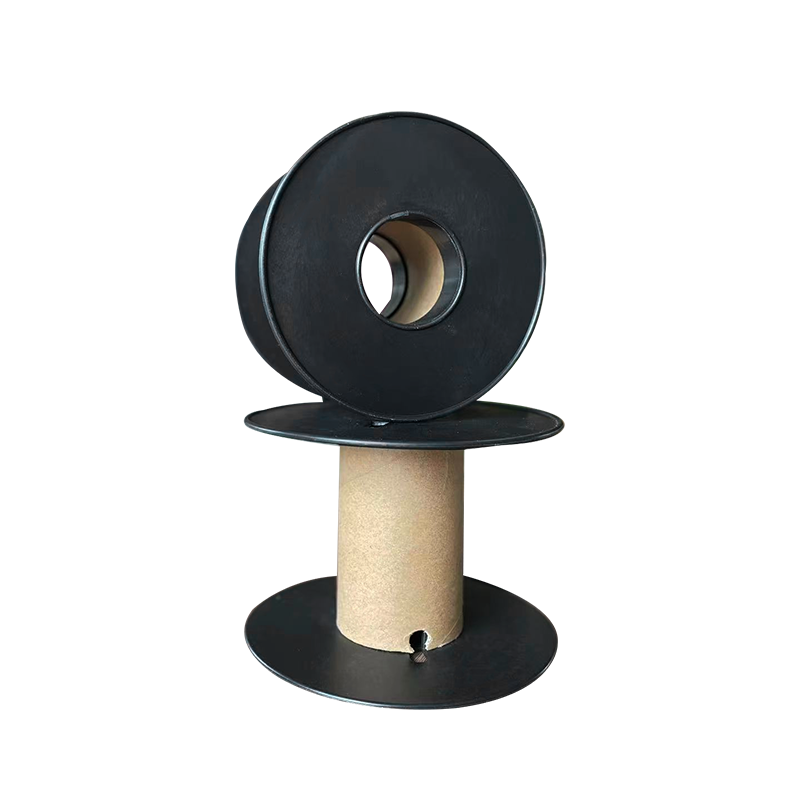 Moisture-Proof Plastic Cable Reel for Wire HandlingInjection-molded plastic reel in ABS, PP, or PE for wire and cable storage and turnover; lightweight, corrosion-resistant, and low-cost for humid or retail-ready use.View Product →
Plywood remains the workhorse for export loads. Sealed faces hold up in container humidity, the reel is treated as a processed wood product in most markets, and small 400 to 500 mm sizes handle 25 to 50 kg of cord without drama. Our factory tour page shows how the three lines are laid out side by side, which is why mixed orders are routine here.
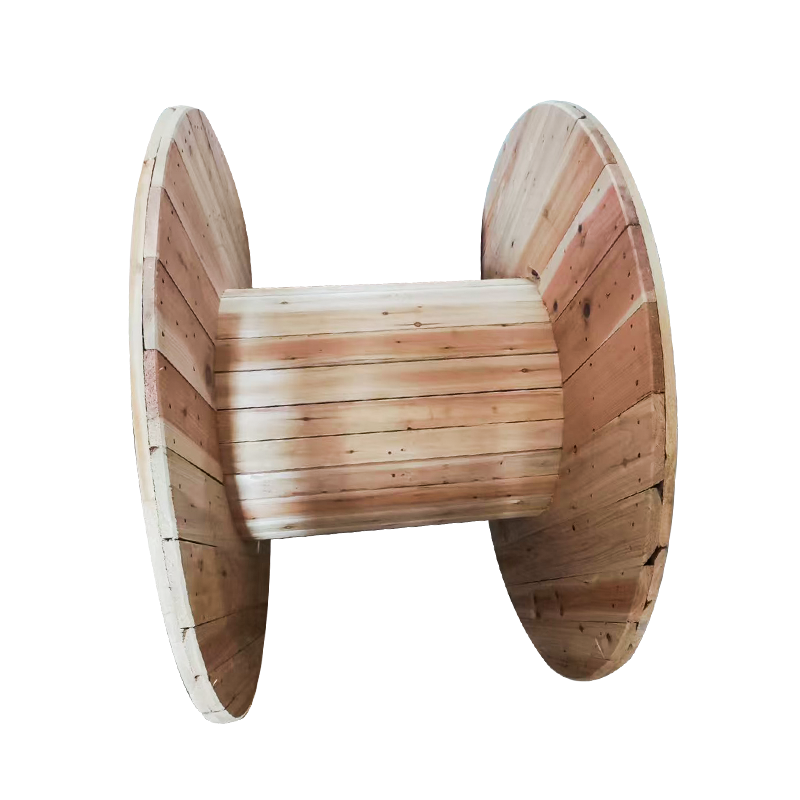 Okoume Plywood Small Cable ReelSmall plywood cable reel with Okoume or poplar faces, 200-600 mm diameters, customizable cores and printing for wire and cable winding and protection.View Product →
Direct answer: work through these five checks in order and a small retractable extension cord can be specified from a catalogue without ordering a sample first.
No. A 1.5 kW heater draws close to 13 A continuously, which is the entire ceiling of a 16 AWG cord before any coiling derating. Use a 12 AWG reel, fully extended, or a fixed circuit.
Usually spring fatigue, grit inside the hub, or a worn ratchet pawl. Clean the hub and test the spring tension before replacing the unit, since the cord itself is often still sound.
Only with a marked outdoor rating: an SJTW jacket, a sealed housing and a stated IP rating. Indoor reels use SJT jackets that stiffen in cold weather and take on water through the cord entry.
Measure the diagonal from the mounting point to the farthest corner and add 5 ft of slack. For most two-car garages that lands between 30 and 40 ft, which usually means stepping up to 14 AWG.
Related Products

Contact us
Address
No. 19, Hualong Industrial Park, Linglong Street, Lin'an District, Hangzhou City, Zhejiang Province, China
Phone
+86-13357115977
QR CODE
 Cable Reel Manufacturers, Cable Packaging Reel Factory

 English
 中文简体