Aug 14, 2026
Content
A cable manufacturer recently rejected a 185 m drum because the packaging reel's barrel collapsed under the weight of the outer layers. The cable had been wound correctly; the reel had not been specified correctly. A cable packaging reel is the structural interface between a cable coil and every fork truck, container floor, lashing strap and payout job it will meet. It must hold winding tension, protect the cable ends, resist moisture and impact, and still meet freight and compliance rules. The general rule is simple: choose the strongest material that your transport and handling plan can justify, size the flange and barrel from the real cable geometry, and verify export treatment before ordering.
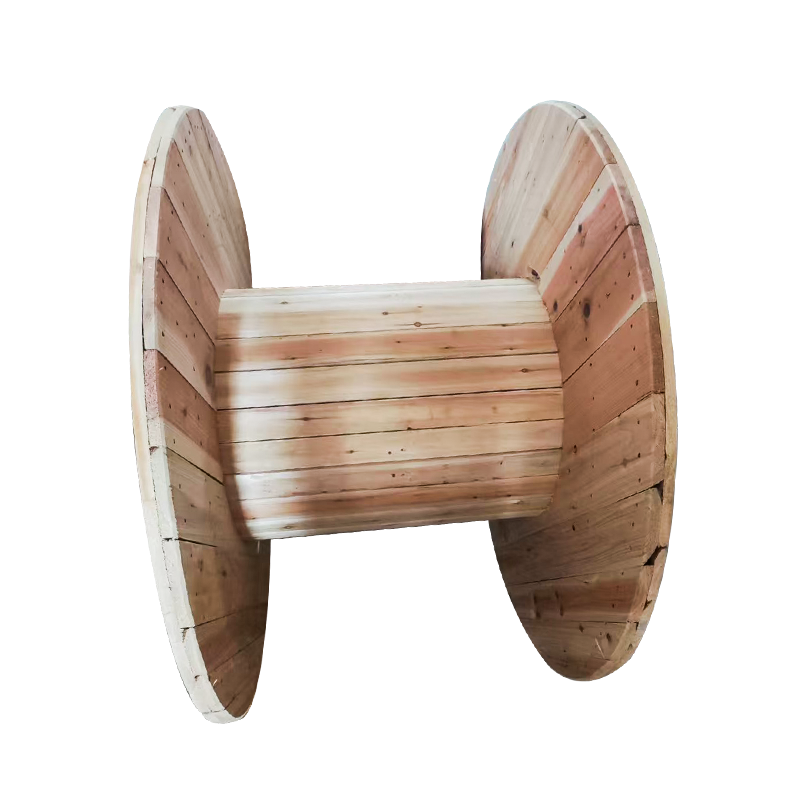
A cable packaging reel is not a storage spool that stays in a factory. It is a disposable or returnable package that must survive open-air yard storage, stacking, lifting through the arbor hole, overseas container transport, and controlled payout. Unlike a simple wire spool, it must combine structural stiffness with predictable weight and footprint. The flange diameter, barrel diameter, traverse width and timber grades must match the cable's minimum bending radius and the mechanical load imposed by the winding process.
Material is the first procurement decision because it determines weight, strength and cost boundaries. The table below compares the main families.
| Material | Strength and load | Tare weight | Moisture resistance | Cost profile |
|---|---|---|---|---|
| Fumigated solid wood | High and very stiff | High | Moderate after seasoning and coating | Low raw material cost, higher freight |
| Plywood | High and predictable | Medium | Good when panel faces are sealed | Moderate, with balanced transport cost |
| Paper | Low to medium | Low | Weak; must be kept dry | Low cost, no return loop |
| Plastic | Medium to high, impact resistant | Medium low | Excellent | High initial cost, reusable |
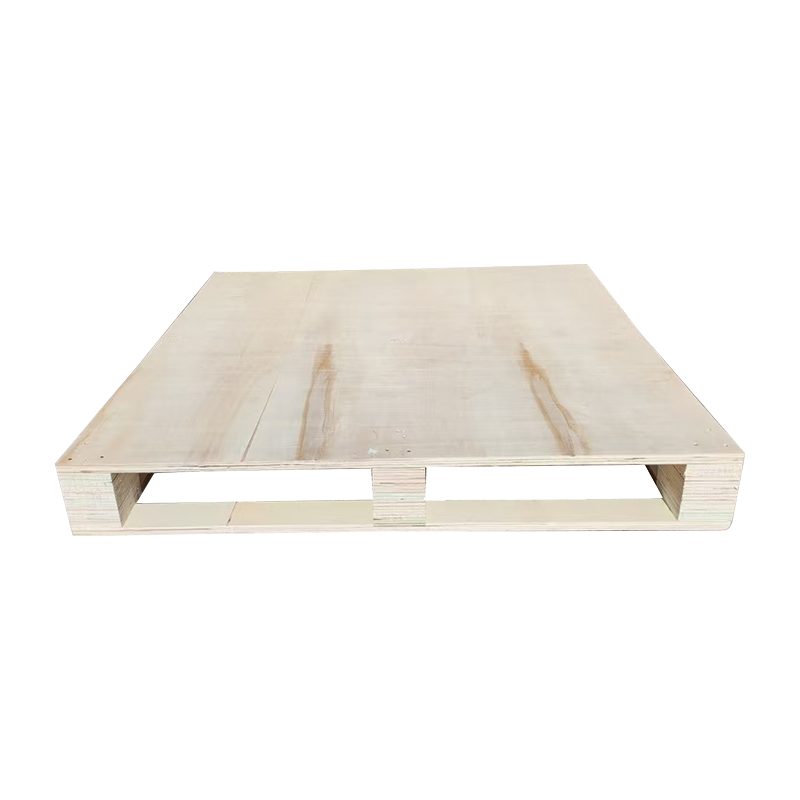
For most medium and heavy cable programs, plywood is the most balanced choice. A bleached poplar plywood cable reel uses engineered panels to avoid the splits and knots that can weaken solid timber, while still offering the stiffness needed for reeling and transport.
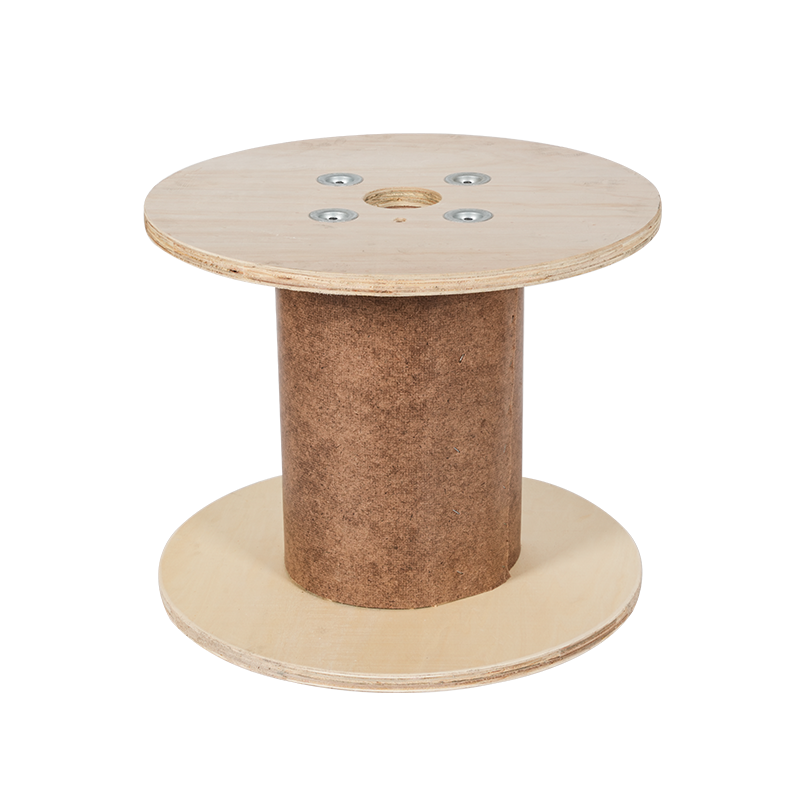 Bleached Poplar Plywood Large Cable Reel Suppliers, Custom FactoryHangzhou Lin'an Yimin Cable Reel Factory is China Custom Bleached Poplar Plywood Large Cable Reel Suppliers and Factory,The bleached popl...View Product →
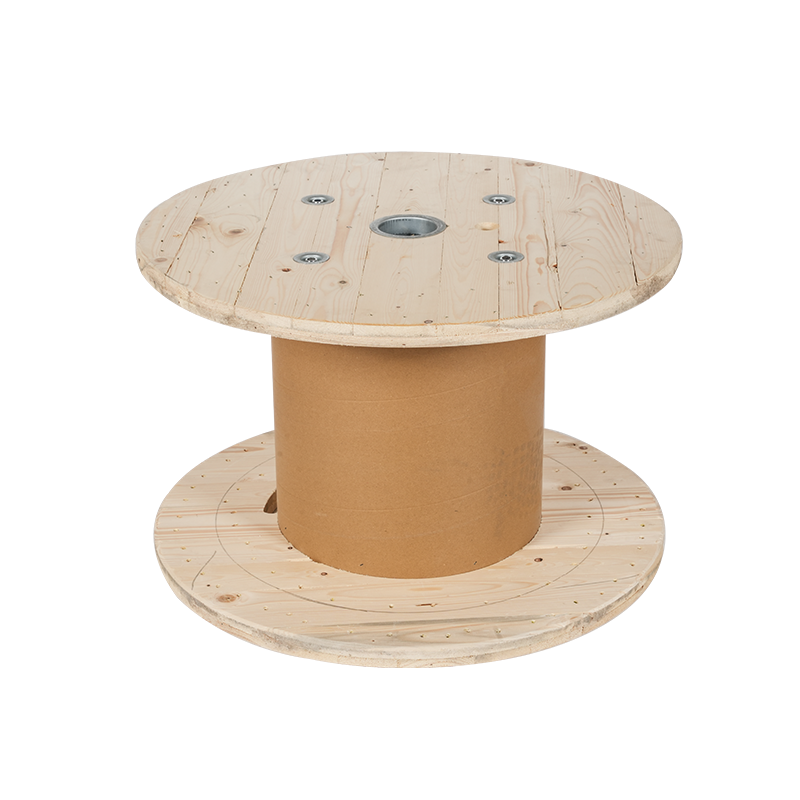
When the cable is light and the destination is nearby, paper reels remove much of the disposal burden. A lightweight paper cable reel is easy to lift, simple to recycle, and best used indoors or under a cover where moisture is not a threat.
 Lightweight Friendly Paper Cable Reel Suppliers, Custom FactoryHangzhou Lin'an Yimin Cable Reel Factory is China Custom Lightweight Friendly Paper Cable Reel Suppliers and Factory,Paper cable reels ar...View Product →
Start with the cable's minimum bending radius. The barrel diameter must respect that value; otherwise, inner layers can suffer permanent insulation damage even when the reel looks intact. For most multi-conductor and LV cables, the barrel should also prevent the cable from bridging between supports during winding, because a suspended section can deform under its own weight.
A practical sizing sequence includes:
Reels with the same outer dimensions can carry very different loads because cable weight per meter changes with armoring and jacket thickness. A supplier that asks for cable type, drum length and winding direction is more likely to deliver a reel that works on the first run.
Visual checks and a few measurements matter more than a sales description. A well-built packaging reel has flat flanges, clean arbor holes, and no loose nails or open joints. The barrel wall must be thick enough for the planned cable weight, and the flange-to-barrel connection must be fastened for shear, not just nailed for appearance.
Consistent machining is important. When the manufacturer controls flange flatness and arbor position, the reel runs more smoothly on a payoff stand and does not force the cable into side-wall contact.
For international cargo, the wood portion of a cable packaging reel is regulated packaging material. Solid wood components must meet ISPM 15 through heat treatment or approved fumigation, show a clear mark, and be free from bark and active pest infestation. Plywood, which is made from veneers and adhesive under heat and pressure, is generally exempt from ISPM 15 marking, but customers still ask for a supplier declaration. Paper and plastic reels avoid the wood rule completely.
Anyone preparing an export shipment should review the fumigated solid wood cable reel export compliance buying guide before finalizing the order. The typical cause of delay is not the reel itself; it is unreadable marks or missing documentation discovered at the port.
A technically correct reel can still fail if the handling sequence is wrong. Chock reels before releasing them from the machine, lift through the arbor hole or an engineered lifting point, and never slide forks under a loaded barrel. In storage, place reels on dry ground, protect flange edges from forklift contact, and keep cable ends sealed until shortly before shipment to avoid condensation.
For outdoor yards and wet sites, material choice often changes at this stage. A moisture-proof plastic cable reel avoids the swelling, rot and splintering that can occur in wet timber. It is also easier to clean and return for reuse on jobs that involve mud, standing water, or repeated handling.
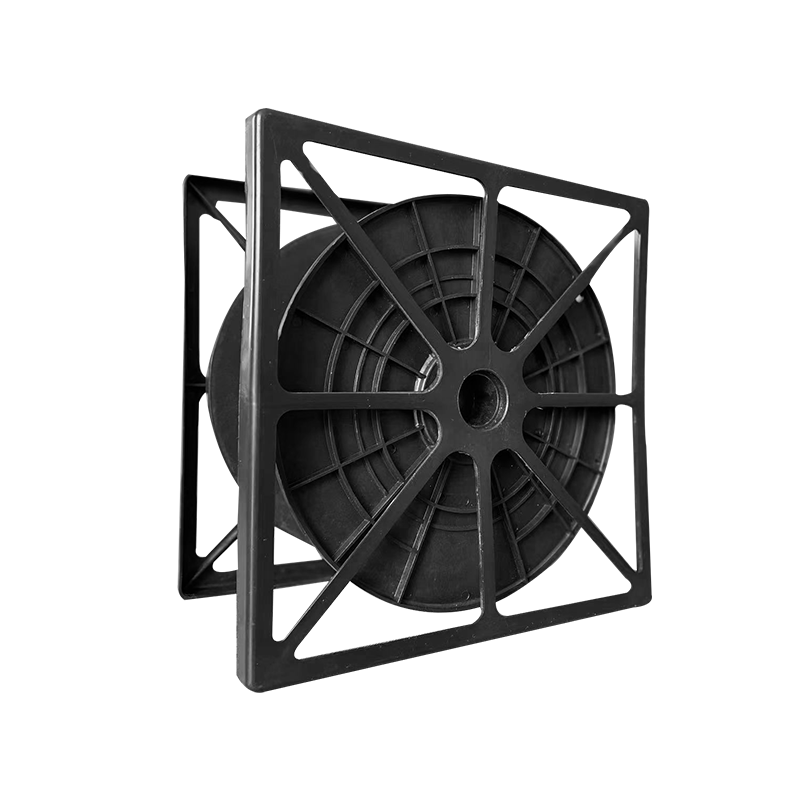 Moisture-Proof Plastic Cable Reel Suppliers, Custom FactoryHangzhou Lin'an Yimin Cable Reel Factory is China Custom Moisture-Proof Plastic Cable Reel Suppliers and Factory,A plastic cable reel is ...View Product →
If reels are stored for several weeks, check that the bottom flange is not sinking into soft ground, the lashing has not loosened, and no protruding armor or cable end can catch on another load. A monthly inspection is usually enough to catch damage before it turns into a transport claim.
A low-priced solid wood reel can become expensive when it increases freight weight, requires ISPM treatment, or cannot be returned. Evaluate the complete program: purchase or deposit, freight, handling, repair, return collection and disposal. Paper reels work well for light cables on short routes because no return loop is needed. Plastic reels work well for frequent reuse. Plywood reels usually balance price, tare weight and strength for export programs.
Ask the supplier how the reel can be recycled or returned at the end of the line. That question is part of the buying decision, not an afterthought.
Because a cable packaging reel is a custom industrial package, the supplier matters. A manufacturer with its own drying, cutting and machining capability can adjust flange diameter, barrel length or arbor tolerance without long lead times. Look for a partner that asks about cable diameter, drum length, top flange, arbor hole and destination. These questions are useful signals that the reel is being treated as engineering, not a commodity.
When one supplier can produce plywood reels, paper reels and plastic drums under the same quality system, you can move between material families without changing workflows. That flexibility matters for companies that adjust export and domestic production volumes throughout the year.
Related Products

Contact us
Address
No. 19, Hualong Industrial Park, Linglong Street, Lin'an District, Hangzhou City, Zhejiang Province, China
Phone
+86-13357115977
QR CODE
 Cable Reel Manufacturers, Cable Packaging Reel Factory

 English
 中文简体
中文简体