Sep 30, 2026
Content
Reel problems usually start on the purchase order, not on the loading dock. A buyer asks for a 1000 mm reeler, receives a 1000 mm flange on a 450 mm barrel, and the rewinder at the far end cannot hold winding tension without the cable sagging into the traverse gap. Flange diameter, barrel diameter, traverse width, flange thickness and material are five separate decisions, and missing one turns a drum into scrap with cable already wound onto it.
This guide covers what a cable reeler is, how the four common materials behave under load, how much cable fits per drum, and what export paperwork actually requires.
A cable reeler is a cylindrical drum with two parallel flanges that carries electrical or fibre cable through winding, storage, transport and payout.
Procurement documents use reeler, reel, drum and spool for the same object, so the words rarely cause confusion in practice. The term worth separating is the retractable cable reel sold for workshops: that is a spring-loaded cord winder with a built-in socket, rated in amps, not a shipping drum rated in tonnes.
Industrial reelers are sized by three numbers in millimetres, written as flange diameter x barrel diameter x traverse width, for example 1000 x 560 x 800. Sizes run from roughly 300 mm to 2500 mm flange diameter. The largest timber drums carry several kilometres of thin cable, or a few hundred metres of heavy power cable before the load rating becomes the limit rather than the volume.
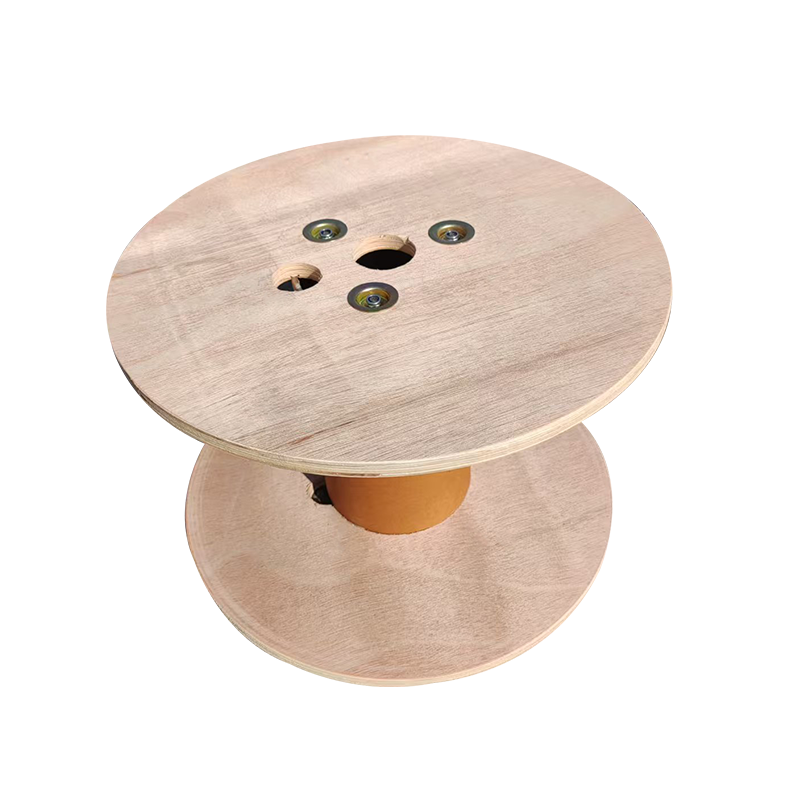
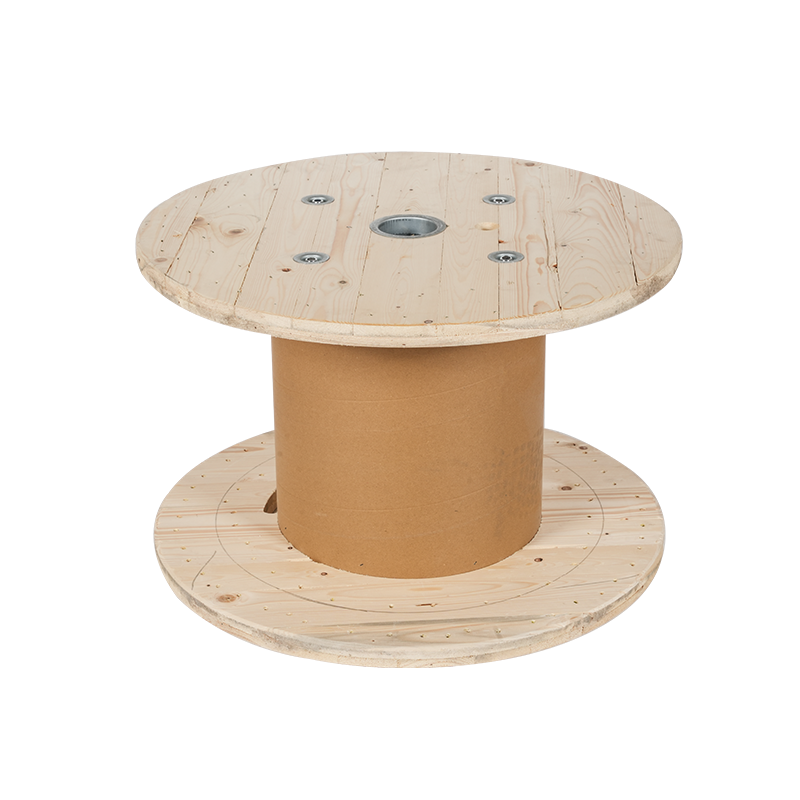
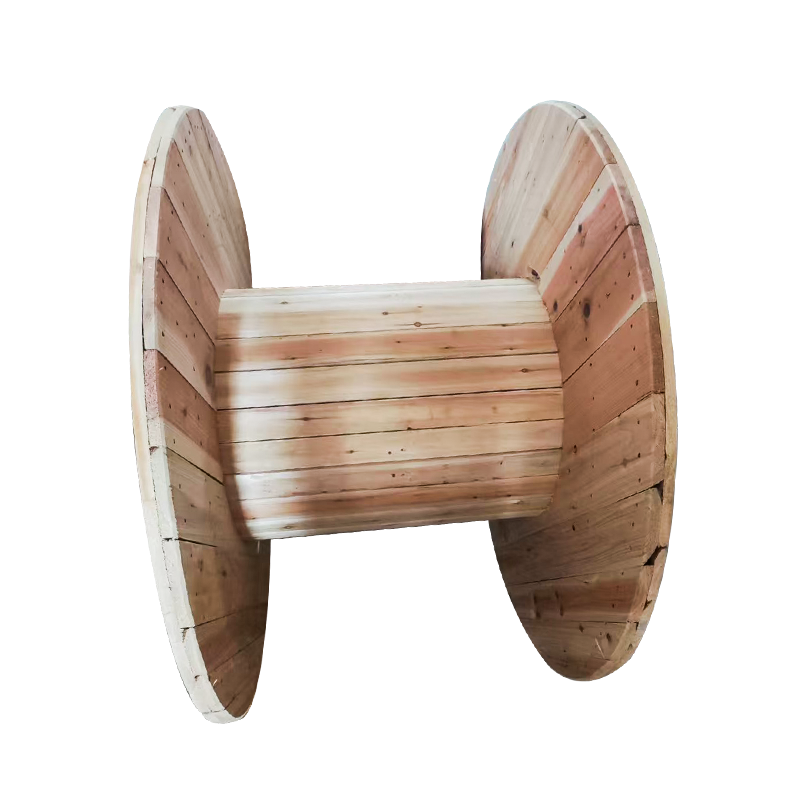
Plywood is the default for reels above 800 mm flange diameter because it stays flat in damp air and, as a glued engineered wood product, normally clears customs without a phytosanitary treatment. Solid wood remains the right answer for the heaviest armoured cable and for buyers who repair and reuse drums across many trips.
| Material | Flange range | Load behaviour | Typical cable | Export note |
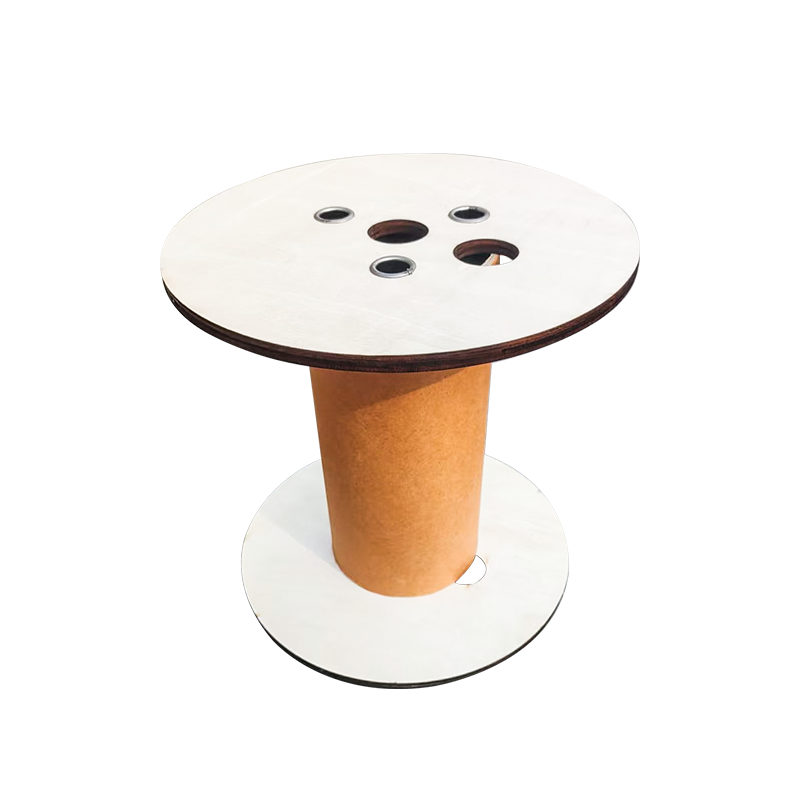
| Plywood, poplar or okoume | 400 to 2500 mm | Stiff flanges, good wet strength | LV and MV power cable | Processed wood, normally ISPM 15 exempt |
| Fumigated solid wood, spruce or cryptomeria | 800 to 2500 mm and above | Highest load, repairable, ages with moisture | Heavy armoured cable | Heat treatment or fumigation plus IPPC stamp |
| Paper | 150 to 600 mm | Light, single trip, low crush resistance | Hook-up wire, fibre | No wood, no phytosanitary step |
| Plastic | 200 to 800 mm | Moisture proof, reusable, low static load | Indoor wiring, control cable | No wood, no treatment required |
Two numbers decide more orders than the material label. Flange thickness sets the load: 15 mm plywood flanges on a 1000 mm reel deflect visibly under two tonnes of cable, while 24 mm flanges on the same diameter hold their shape through a full shipment. The centre hole and bolt pattern must also match the customer's winding shaft, and a mismatch there stops production faster than any strength problem.
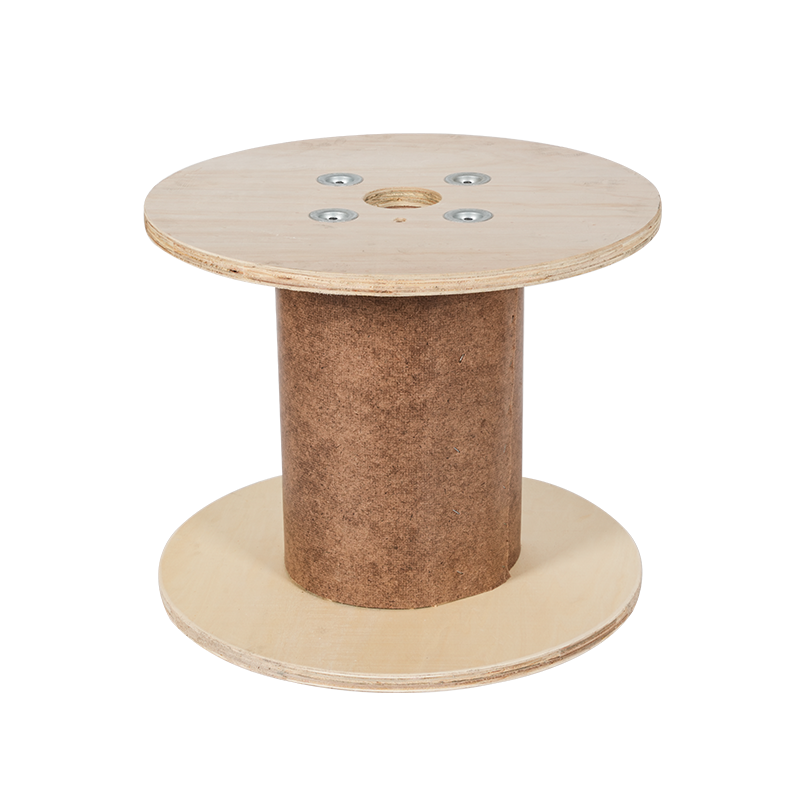 Bleached Poplar Plywood Large Cable ReelThe bleached poplar plywood large cable reel uses poplar as the base material, and the surface is bleached to form a white finish. It adopts a multi-layer plywood proc...View Product →
Cable capacity can be estimated before a drum is built, using one formula: L = 0.75 x (Df x Df - Db x Db) x W / (d x d x 1000). Df is flange diameter, Db is barrel diameter, W is traverse width and d is cable outside diameter, all in millimetres, and the result is metres.
The 0.75 figure is a packing factor, not a constant. Stiff XLPE and armoured cable winds with visible gaps and lands nearer 0.70, while flexible rubber cable under steady tension reaches 0.80. Quoting the realistic factor matters, because the last tenth of theoretical capacity is rarely reached on a live winding line.
On a 1000 x 560 x 800 mm reel, capacity by cable outside diameter runs as follows.
Loaded reels should be stored standing on their flanges on level ground with chocks on both sides, and never laid flat on a flange face. A drum stored on its side concentrates the entire cable load on one flange edge, and plywood or paper flanges deform permanently within a few days.
Most transit damage comes from movement rather than weight. A reel free to roll inside a container arrives with cracked flanges and a loose cable pack, even when the drum was rated well above its load.
The full sequence, from unloading to long-term storage, is set out in this guide to cable drum handling and storage best practices.
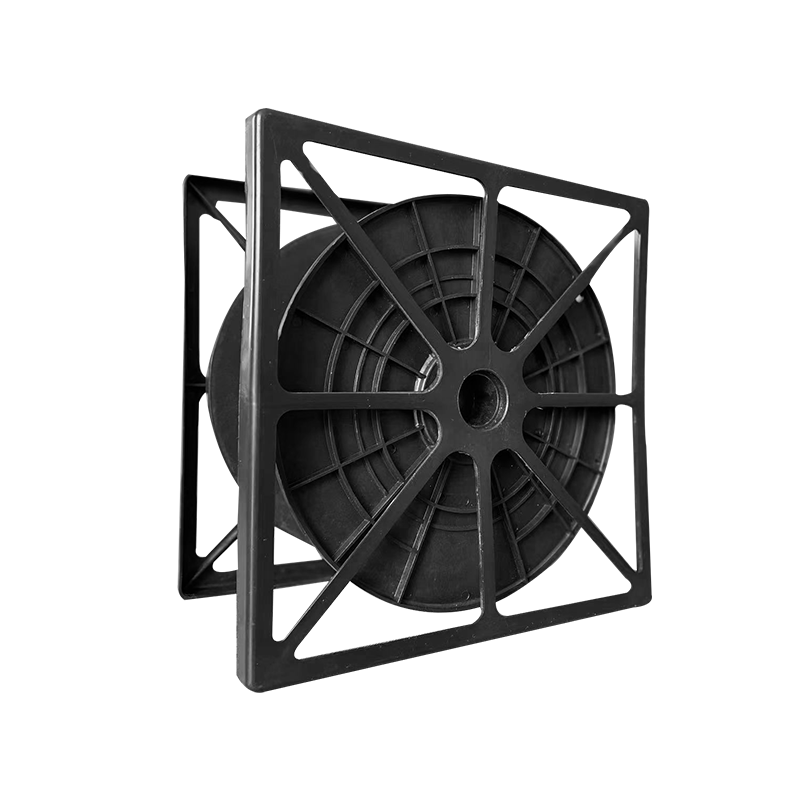 Moisture-Proof Plastic Cable ReelA plastic cable reel is a plastic cable reel used for storage, turnover, and transportation of wires and cables. It is lightweight, corrosion-resistant, and low-cost. ...View Product →
Solid wood reels crossing a border must be heat treated or fumigated and stamped under ISPM 15. Plywood and paper reels are treated as processed material in most destinations and normally need no phytosanitary step, which is why export orders often move from solid wood to plywood once the paperwork becomes a recurring cost.
Paper reels take the idea further. A paper drum built for hook-up wire or fibre weighs a fraction of a timber drum of the same diameter, needs no wood treatment and is recycled with ordinary paper waste at the end of the trip.
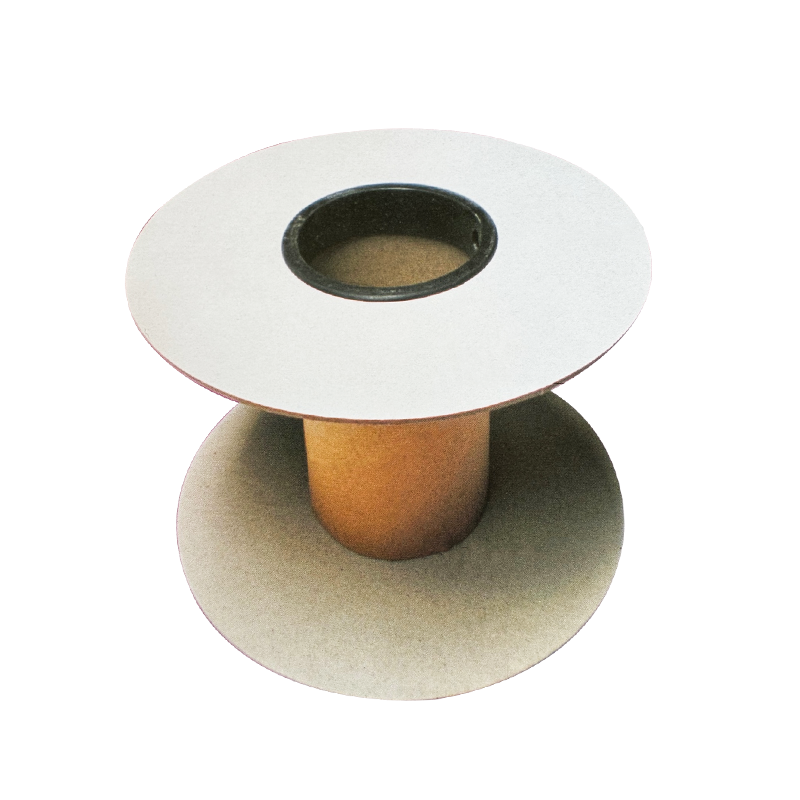 Lightweight Friendly Paper Cable ReelPaper cable reels are made of high-strength paper materials such as corrugated paper, kraft paper, and single white paper as the main raw materials. They are made thro...View Product →
Yes. Reeler, reel, drum and spool describe the same flanged drum in most procurement documents. The only genuinely different product is the retractable cord reel sold for workshops, which has a built-in socket and an amp rating instead of a load rating.
Use L = 0.75 x (Df x Df - Db x Db) x W / (d x d x 1000) with all dimensions in millimetres. A 1000 x 560 x 800 mm reel holds roughly 1271 m of 18 mm cable or 336 m of 35 mm cable, before any allowance for winding tension.
In most markets, no. Plywood counts as processed wood because the veneers are glued under heat and pressure, so it is normally exempt from ISPM 15. Solid wood reels need heat treatment or fumigation plus an IPPC stamp. Confirm the requirement with the importer, since a few destinations add their own declarations.
Movement. An unchocked reel rolls, its flanges crack and the cable pack loosens. Chock, strap and block every drum. The second most common cause is flange deflection on a drum that was undersized for the load it was given.
Related Products

Contact us
Address
No. 19, Hualong Industrial Park, Linglong Street, Lin'an District, Hangzhou City, Zhejiang Province, China
Phone
+86-13357115977
QR CODE
 Cable Reel Manufacturers, Cable Packaging Reel Factory

 English
 中文简体
中文简体