Sep 04, 2026
Content
For a crate carrying a 2.5-tonne machine tool, the first failure point is rarely the lumber itself. It is the corners and panel joints, where nails work loose under hours of road vibration and the box racks out of square until a panel splits. A steel-strapped wooden crate is built to stop exactly that: high-tensile steel banding is tensioned around the body, corners, and lid of a conventional lumber crate, holding every panel in compression so the structure behaves as one rigid unit instead of a set of nailed-together boards. For export buyers shipping heavy machinery, cable drums, and dense industrial cargo by sea, the real question is not whether this construction works, but when the added cost pays for itself and which specifications belong on the purchase order.
Put simply, it is a standard sawn-lumber crate whose weakest points—the panel joints, corners, and lid seam—are clamped shut by tensioned steel banding. The base structure is familiar: a framed skid bottom, board or plywood side panels, corner uprights, and a lid. What defines the steel-strapped version is high-tensile steel banding, typically 19 mm or 32 mm wide and 0.5–1.0 mm thick, wrapped around the crate body and, in well-built designs, seated in sawn grooves at the corners so the strap cannot slide or shift under load.
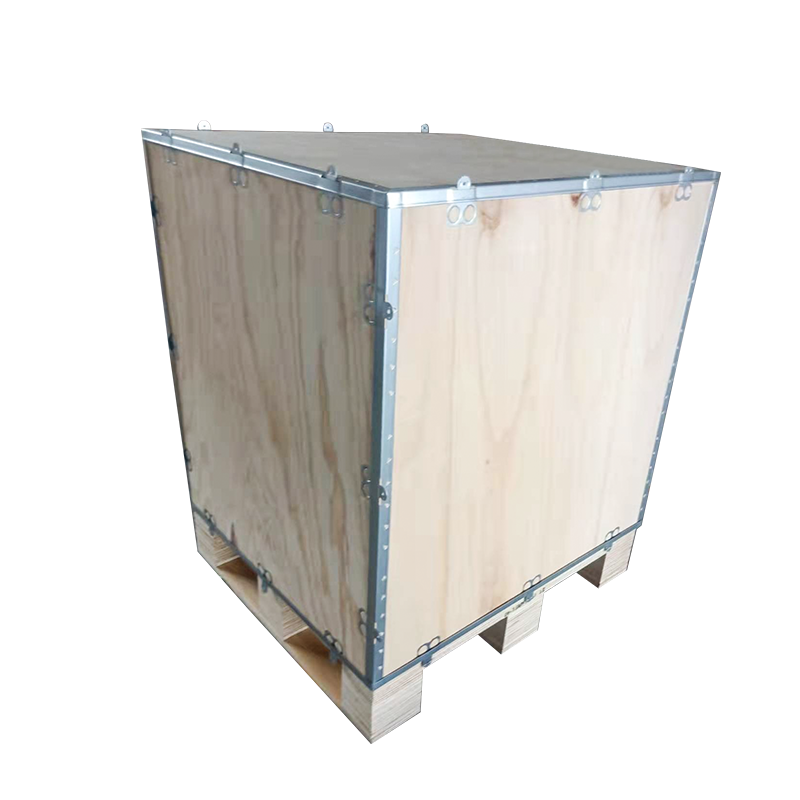 Compression Steel-Strapped Wooden BoxSteel-strapped wooden boxes are mainly made of multi-layer plywood and galvanized steel belts connected by locks. The structure is foldable and removable. Some models ...View Product →
Strapping tools pull the band tight before it is sealed, and that tension stays locked in for the life of the shipment. The logic matters here: wood performs well under compression but poorly in tension along nailed joints. A corner holds until vibration and load movement start pulling it apart, and once one corner opens, the crate loses its geometry and the contents begin carrying structural loads they were never meant to take. The steel strap takes over the tension duty, so the joints stay closed through lifting, stacking, and transit.
A loaded crate lives under two opposing forces. Compression squeezes the lumber, and wood resists that naturally. Racking and tension try to pull the panels apart at the corners, and this is where a plain nailed crate gives way. Steel-strapped construction splits the job between materials: the lumber carries compression, the banding carries tension, and each does the work it handles best. In day-to-day logistics, the difference shows up in three places:
The table below sums up how the two constructions compare on the points that usually decide a purchase:
| Consideration | Regular Wooden Crate | Steel-Strapped Wooden Crate |
|---|---|---|
| Typical working load | Light to medium cargo, generally up to around 1 tonne | Heavy machinery and dense cargo, commonly 1 tonne and above |
| Corner and joint behavior | Relies on nails and fasteners; vulnerable to racking | Banding clamps joints in compression; corners resist separation |
| Stacking | Accepts moderate stacking; side panels can bow outward | Holds its geometry under load; lid stays seated |
| Long sea transit | Joints loosen as vibration works fasteners over weeks | Tension stays constant across the voyage |
| Relative cost | Lowest material cost per unit | Modest premium per unit, offset by lower damage risk |
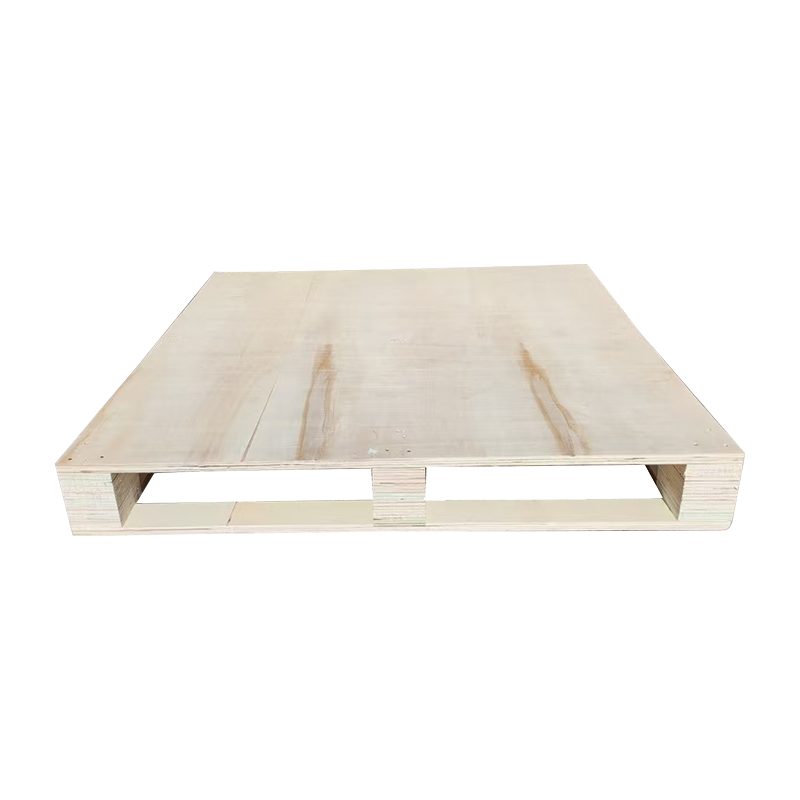
One alternative deserves a mention here. For cargo that needs clean surfaces, stable moisture behavior, or a lighter overall package, plywood construction is a legitimate route—plywood panels have no end-grain joints to split, so they resist racking on their own and often pair well with lighter banding or none at all.
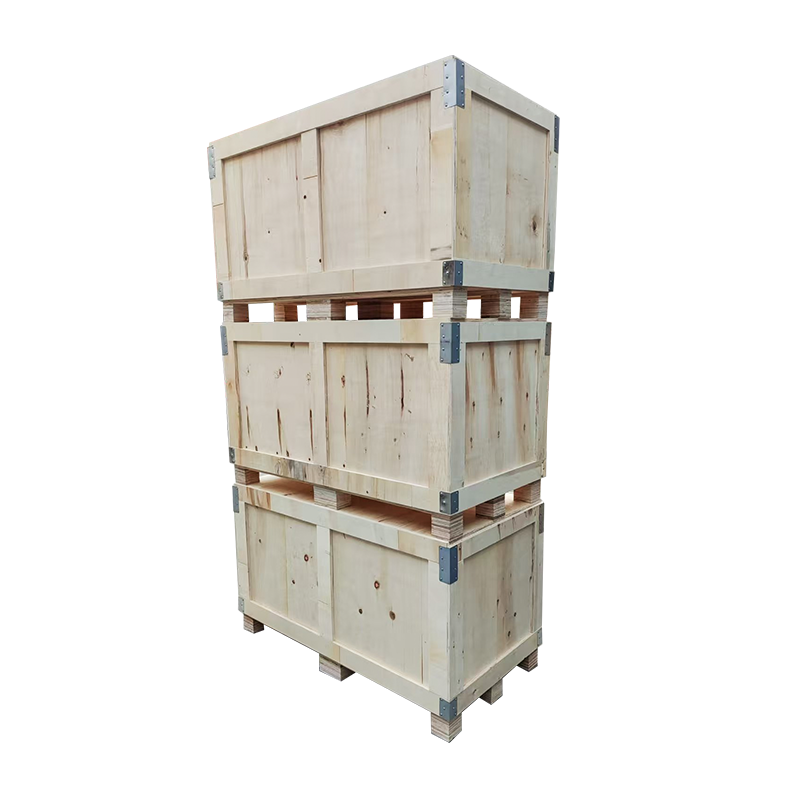 High Strength Plywood BoxHigh-strength Plywood Boxes adopt a multi-layer glued structure, which is lighter than solid wooden boxes. At the same time, they have higher impact resistance and sta...View Product →
Any solid wood packaging crossing an international border must comply with ISPM 15, the international standard governing wood packaging material. In practice, the lumber is heat treated to a core temperature of 56°C for at least 30 minutes and stamped with the IPPC mark that customs inspectors check. The steel banding is not regulated; the wood is.
Non-compliant crates can be held at the border, treated at the port at the importer's expense, or rejected outright in stricter markets. Because strapping and treatment are separate production steps, ordering from a manufacturer that performs heat treatment or fumigation and IPPC marking in-house removes the risk of a crate being strapped before it is certified. Export buyers should also confirm what paperwork accompanies the shipment—a treatment declaration listing the IPPC mark is the usual evidence, and a supplier used to export lanes will produce it without prompting.
Light spare parts, short domestic hauls, air freight with controlled handling, and one-way shipments of low-value goods rarely generate the tension loads banding exists to resist. Spending the extra budget there adds cost without adding protection.
Not all strapped crates are built to the same standard, and the differences hide in the details. Before approving a design, confirm:
For a step-by-step walkthrough of load matching and design decisions, see this guide to choosing a steel-strapped wooden crate for heavy equipment.
Strapping works best when it is part of the structural design from the start, not an accessory bolted on at the packing stage. A manufacturer who builds the crate around the cargo—its weight distribution, lifting points, and transit route—can place banding where the forces actually travel. Our factory has spent 24 years producing cable reels, pallets, and wooden packaging, running an annual capacity of five million units across a 5,000-square-meter plant, and roughly 20% of that output ships to overseas customers. Volume matters to buyers here: standard strapping, heat treatment, and IPPC marking run daily on our lines, not occasionally.
Steel-Strapped Wooden Crate ManufacturersCompression Steel-Strapped Wooden BoxView Product →
If a shipment is on your schedule, start with three inputs—cargo weight, dimensions, and route. Those settle the strap specification, lumber grade, and treatment requirements quickly, and they keep the crate you receive matched to the load it will actually carry.
Related Products

Contact us
Address
No. 19, Hualong Industrial Park, Linglong Street, Lin'an District, Hangzhou City, Zhejiang Province, China
Phone
+86-13357115977
QR CODE
 Cable Reel Manufacturers, Cable Packaging Reel Factory

 English
 中文简体
中文简体