Sep 18, 2026
Content
A fifty-foot hose dragged across wet concrete collects grit, kinks at the worst possible moment, and throttles the flow right when you are halfway through a driveway. If that scene is familiar, the fix is mechanical, not motivational: a pressure washer with hose reel turns fifteen minutes of coiling into about twenty seconds of cranking. Our verdict comes first, as it should: buy the reel if you move the machine between jobs or pack up daily; skip it if the washer lives permanently beside one patio and comes out a few times a year. When you do buy, judge the unit on two points above everything else—whether the drum genuinely matches the hose, and whether the swivel and crank are built to survive water, grit, and full working pressure. Everything else is packaging.
A reel is not a cosmetic accessory. On a machine that sees regular work, it moves four numbers in your favor:
For occasional household use those gains are modest. For anyone washing weekly—fleet vehicles, storefronts, fencing, patios—they compound fast.
Many mid-range and professional gas units carry a crank spool built into the frame, usually wound with 3/8-inch steel-braided hose. The convenience is real, but check two details before committing. First, width: a wound fifty-foot hose sticks out past the wheels and changes how the unit fits into a shed or van. Second, the swivel—the rotating joint that feeds pressurized water into a spinning drum is the part most likely to weep first, so it should carry a pressure rating printed on its body.
Newer compact designs swap the crank for a spool you slide the hose onto in a few quick turns. They beat hand-coiling easily and suit the shorter, lighter 1/4-inch hose typical of electric machines, but capacity is limited and they rarely accept professional high-pressure hose.
When fifty feet is not enough, an external reel carrying 100 to 200 feet of 3/8-inch hose, rated for 3,000 to 4,000 PSI, mounts on a cart, truck bed, or trailer. This is the standard arrangement for exterior cleaning crews. Size the reel and its swivel above your machine's maximum output, and if you run a hot-water unit, confirm the hose and reel are temperature-rated too—many standard hoses top out near 140 to 150°F.
Reel capacity is not a single number; it shrinks as hose diameter grows, because a fatter hose eats drum space quickly. The pairing below reflects what you will find on store shelves.
| Hose inner diameter | Typical reel capacity | Typical match |
|---|---|---|
| 1/4 in | 50–100 ft | Compact electric washers |
| 5/16 in | 75–150 ft | Mid-range gas machines |
| 3/8 in | 100–200 ft | Professional units and cart reels |
The quieter spec is the drum core diameter. Hose manufacturers publish a minimum bend radius, typically around 8 to 12 times the hose's inner diameter, and a wrap that rides below it fatigues the reinforcement long before the cover shows damage. Winding engineers apply the same logic with stricter numbers—drum-to-cable ratios near 25:1 are a common guideline for power cable—because the physics of a tight wrap do not care what is being wrapped.
Rule of thumb: a larger drum core costs a little bulk and buys a lot of hose life. Bend radius is the spec most buyers never think to check.
Width matters as well: a drum that piles all fifty feet against one flange builds hard pressure spots and deforms the pack. Crank steadily and guide the hose side to side so the wraps lie flat and even.
A pressure washer is a water tool, so the reel lives in spray, humidity, and puddles. Powder-coated steel is the common choice and serves well until the coating chips; bare metal then rusts fast. Reinforced engineering polymers simply do not corrode, which is why better hose reels use resin flanges.
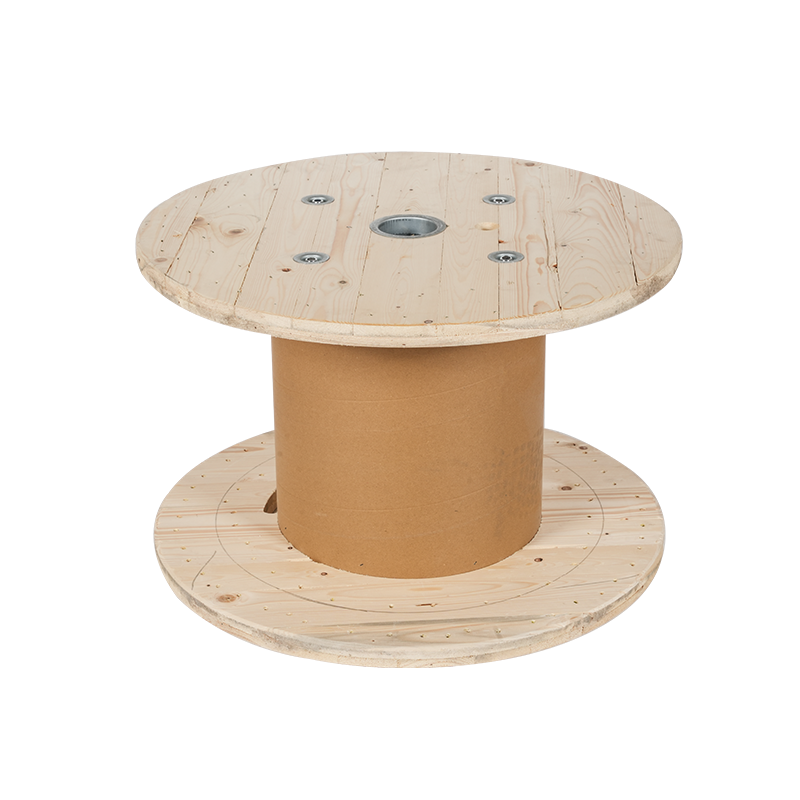
We watch this question from the manufacturing side every day. Our factory winds cable on drums made of plywood, solid wood, paper, and plastic, and for damp storage rooms or humid export shipments, polymer wins the argument, because any material that swells or corrodes eventually punishes the winding. That is exactly why our moistureproof plastic cable reel exists for wet conditions—a hose reel faces the same environment in miniature. If you are weighing drum materials for cable rather than hose, how a plastic cable drum differs from a wooden one walks through the same trade-offs in depth.
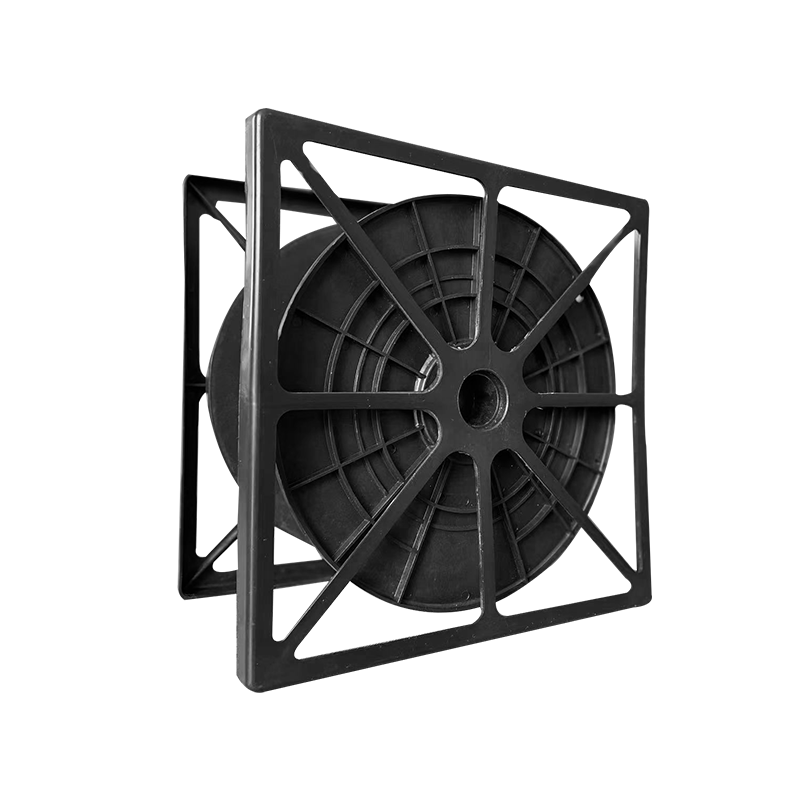 Moisture-Proof Plastic Cable Reel for Damp Storage and ShippingMade from injection-molded engineering plastics like ABS, PP, and PE with metal parts, this lightweight, corrosion-resistant reel suits humid storage and export shipments, where swelling or corroding drum materials would damage the winding.View Product →
Whichever material you choose, run a finger along the flange edge. Burrs and rough flash chew a hose cover one wrap at a time; a properly finished drum edge feels smooth enough to trust bare-handed.
In winding-drum manufacturing, a short list of physical checks decides whether a unit is fit to ship: flange alignment, hub runout, balance in rotation, edge finish, and hardware torque. Twenty-four years of making cable drums have taught us that none of this is exotic, and every item on the list maps onto a test you can run in a store aisle.
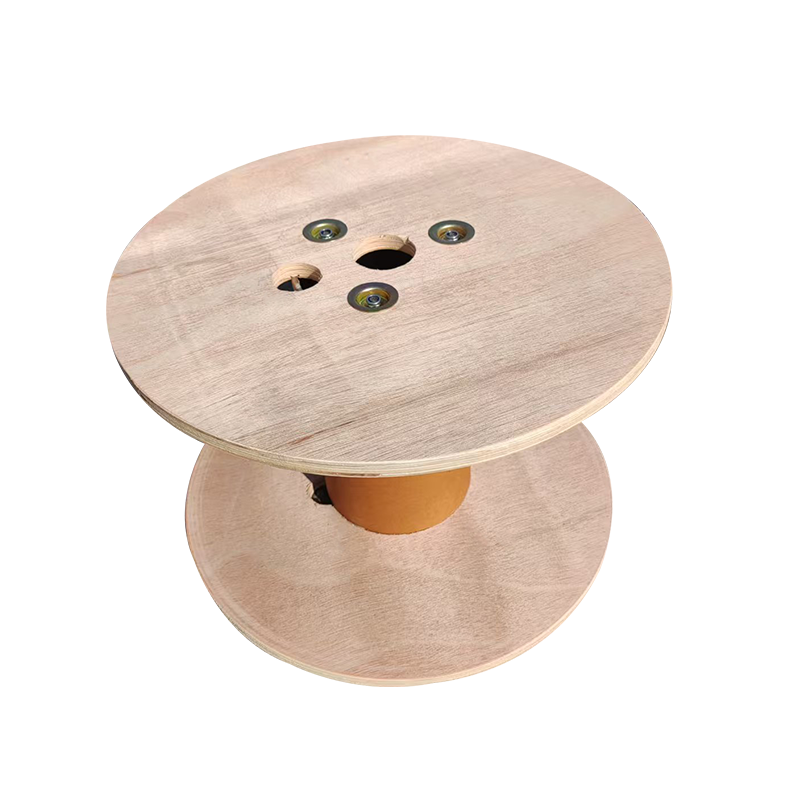
Compact drums are where cheap designs fail first, incidentally. Small spools are the hardest to keep stiff, which is why our small plywood reels use a laser-engraved steel tube core; stiffness without weight is a solved problem in cable winding, and there is no reason to accept a flexing flange on a hose reel.
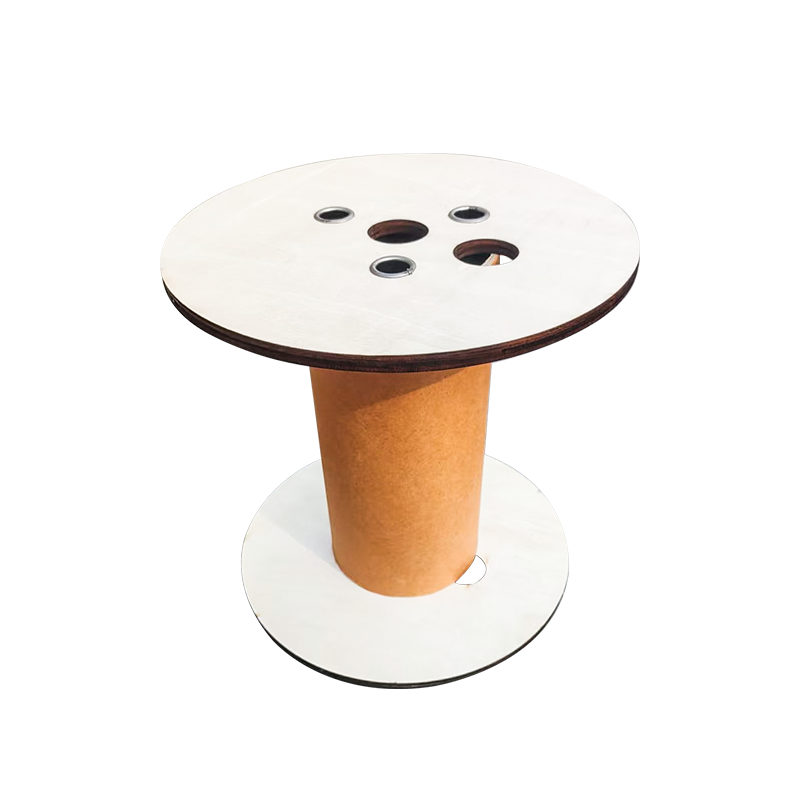 Laser Engraved Steel Tube Plywood Small Cable ReelA steel tube skeleton gives this small plywood reel strong load-bearing capacity without added weight, with flange diameters of 200–400mm. It needs no fumigation for export and stays rigid, ideal where space is limited.View Product →
The care a hose reel needs is simple, but the order matters:
A hose is only half of a professional setup. Electric machines, and the pumps, lights, and tools around a wash bay, also mean cable—often a lot of it—and cable wound carelessly creates the same tangles and trip hazards as a loose hose. Two rules carry over directly from our side of the industry: never run high current through a fully coiled cord, because the heat has nowhere to go, and store cable on a proper drum so the conductors are neither crushed nor kinked.
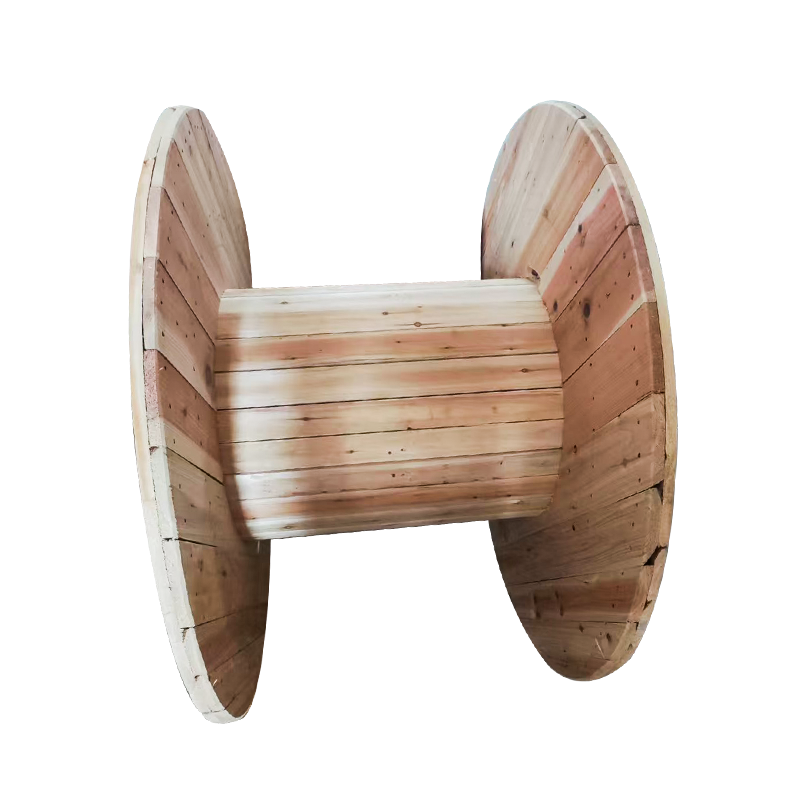
This is the business our factory has practiced for more than two decades in Hangzhou: cable drums for power, communication, construction, and petroleum customers, produced at a capacity of five million units a year, with fumigated wooden reels prepared for export shipping. If your work already involves supply cable, extension leads, or temporary site power, the principles that keep a hose honest apply just as much to safe and organized cable management—and a proper drum is where both start.
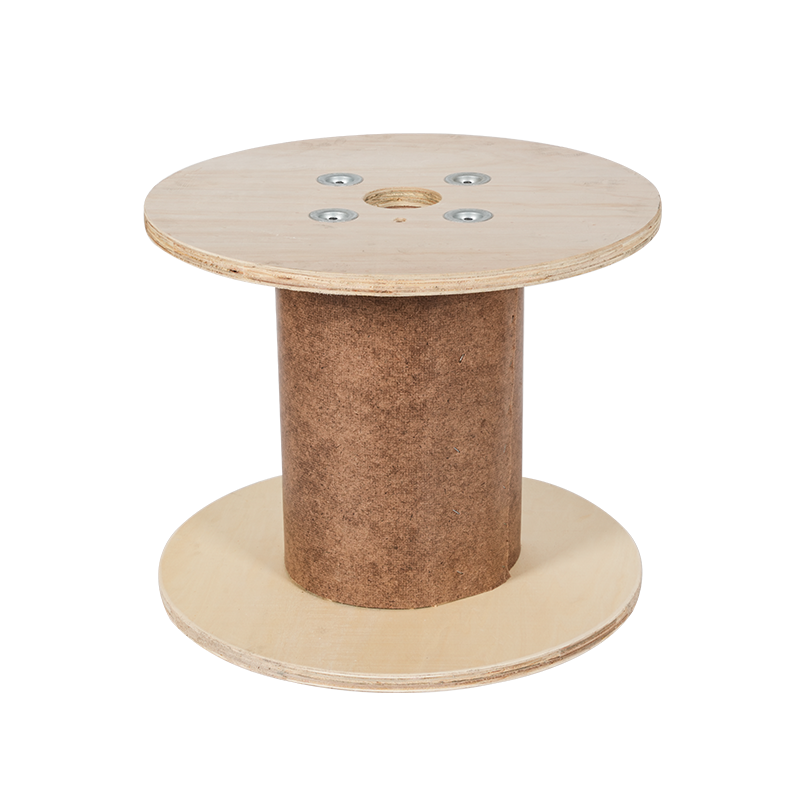 Plywood Cable Reels for Cable, Hose, and Rope WindingLightweight, tough, and cost-effective plywood reels serve power, communications, construction, and petrochemical industries. Their wood's elasticity resists deformation, keeping wound cable—or hose—intact during transport, storage, and daily use.View Product →
Wind water on one drum, wind power on another, and the whole setup packs down in minutes. That is the quiet, practical promise behind every well-built reel, whether it carries a pressure hose or a kilometer of cable.
Related Products

Contact us
Address
No. 19, Hualong Industrial Park, Linglong Street, Lin'an District, Hangzhou City, Zhejiang Province, China
Phone
+86-13357115977
QR CODE
 Cable Reel Manufacturers, Cable Packaging Reel Factory

 English
 中文简体
中文简体